Cakes & Cupcakes
Angel Food Cake
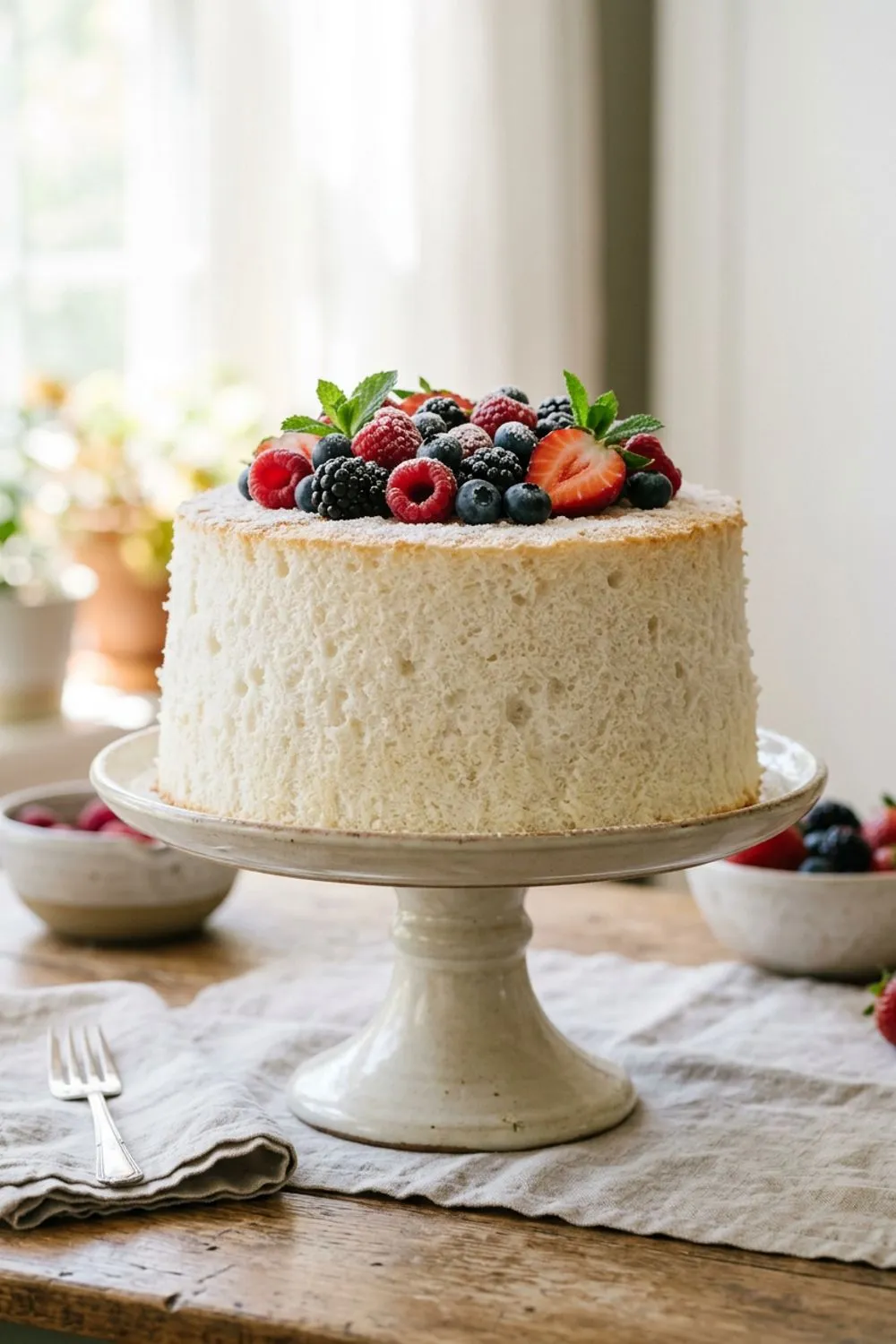
A Cake Made of Air and Magic
Angel food cake is, in my opinion, one of the most remarkable things you can create in a kitchen. You start with nothing more than egg whites, sugar, and a little flour, and through careful technique and a bit of patience, you end up with a cake that is impossibly tall, cloud-light, and almost ethereal in its delicacy. It barely registers on the plate, yet the flavor — clean, sweet, with just a hint of almond — lingers long after the last bite.
I have a complicated relationship with this cake. It was the first cake I ever made that failed spectacularly — a flat, dense, rubbery disc that bore no resemblance to the towering beauty in the cookbook photograph. But failure is a powerful teacher, and through that experience, I learned more about the science of egg whites, folding technique, and oven behavior than any baking class could have taught me. The version I share with you today is the result of those lessons, refined over years of practice until the recipe became essentially foolproof.
What I love most about angel food cake is how it defies expectations. It looks like it should be complicated and fussy, but once you understand the principles behind it, the technique becomes intuitive and almost meditative. The rhythmic folding, the patient sugar additions, the quiet anticipation as it bakes — there is a calm focus to making angel food cake that I find deeply satisfying.
Understanding the Science Behind the Cake
Why Egg Whites Are the Foundation
Angel food cake contains no butter, no oil, and no egg yolks. The entire structure of the cake comes from whipped egg whites, which trap millions of tiny air bubbles that expand in the oven’s heat and set into the cake’s signature airy crumb. This is why the technique matters so much — every decision you make either preserves or destroys those precious air bubbles.
Using 12 egg whites might seem excessive, but it is exactly the right amount for a full-sized tube pan. The whites need to fill the pan about two-thirds full to get the proper rise and structure. Too few whites and the cake will be squat and underdeveloped. Too many and it can overflow.
The Role of Cream of Tartar
Cream of tartar is an acid that stabilizes the egg white foam, making it more resistant to deflating during folding and baking. Without it, the whipped whites would lose volume much more quickly, and the finished cake would be denser and more prone to collapsing. There is no effective substitute — this is one ingredient you genuinely need.
Why Cake Flour, Not All-Purpose
Cake flour has a lower protein content than all-purpose flour, which means it produces less gluten when mixed into the batter. Less gluten means a softer, more tender crumb — exactly what you want in angel food cake. If you absolutely cannot find cake flour, you can approximate it by replacing 2 tablespoons of all-purpose flour per cup with cornstarch, but the real thing produces noticeably better results.
The Keys to Success
Start with Clean Equipment
This is not optional or pedantic — it is essential. Even a trace of fat on your bowl, whisk, or spatula will prevent the egg whites from whipping to their full volume. Wash everything in hot, soapy water, rinse well, and dry completely before you start. Some bakers wipe their bowl with a bit of white vinegar or lemon juice as extra insurance. Glass or metal bowls are ideal; plastic can harbor invisible oils.
Separate Eggs When Cold, Whip When Warm
Cold eggs separate more cleanly — the yolks hold together better and are less likely to break into the whites. Separate them straight from the refrigerator, then let the whites come to room temperature before whipping. Room-temperature whites whip to a greater volume than cold ones, which directly translates to a taller, lighter cake.
The Sugar Addition Is a Patient Process
Adding sugar to egg whites is not something you can rush. Each tablespoon needs time to dissolve into the foam before the next addition. If you dump it all in at once, the sugar will weight down the whites and you will never achieve stiff peaks. Think of it as feeding the meringue — slow, steady, one spoonful at a time. The whole process takes about 5-7 minutes, and the result should be a thick, glossy, marshmallow-like meringue that holds firm peaks.
Folding Is the Most Important Skill
The folding step is where most angel food cakes succeed or fail. You need to incorporate the flour without deflating the egg whites, and it is a delicate balance. Use the largest rubber spatula you have. Cut down through the center of the whites, sweep along the bottom of the bowl, and bring the spatula up and over in one smooth motion. Rotate the bowl a quarter turn and repeat. Work with purpose but without aggression — you want thorough incorporation with minimal loss of volume.
It is normal for the batter to lose a little volume during folding. If you see some unincorporated streaks of flour, that is fine — a few light strokes will take care of them. But if the batter starts to look noticeably flat and runny, you have gone too far. Practice really does make perfect with this technique.
Never Grease the Pan
I cannot emphasize this enough. The batter needs to grip the sides of the pan as it rises, using the rough surface as scaffolding. A greased pan causes the batter to slide down, resulting in a cake that is short, dense, and sad. Use an ungreased aluminum tube pan — the kind with removable bottom and little legs on top for inverted cooling.
Cooling and Unmolding
The Inverted Cooling Method
The moment the cake comes out of the oven, flip the pan upside down. If your pan has legs, set it on those. If it does not, slide the center tube over the neck of a wine bottle or a tall funnel. The cake must cool completely upside down — this allows gravity to gently stretch the delicate structure while it sets, preventing collapse.
Resist every urge to touch, poke, or peek at the cake during cooling. Give it at least 90 minutes, or until the pan is completely cool to the touch. Patience here is the difference between a towering masterpiece and a disappointment.
Releasing the Cake
Once cool, run a long, thin knife around the outer edge of the pan and around the center tube. Use gentle sawing motions rather than prying. Then push up on the removable bottom to lift the cake out. Run the knife along the bottom to separate the cake from the pan base, and invert onto a serving plate.
The cake will have a slightly rough, golden exterior — this is normal and beautiful. The torn, almost cottony texture of the outside is part of angel food cake’s charm.
How to Serve Angel Food Cake
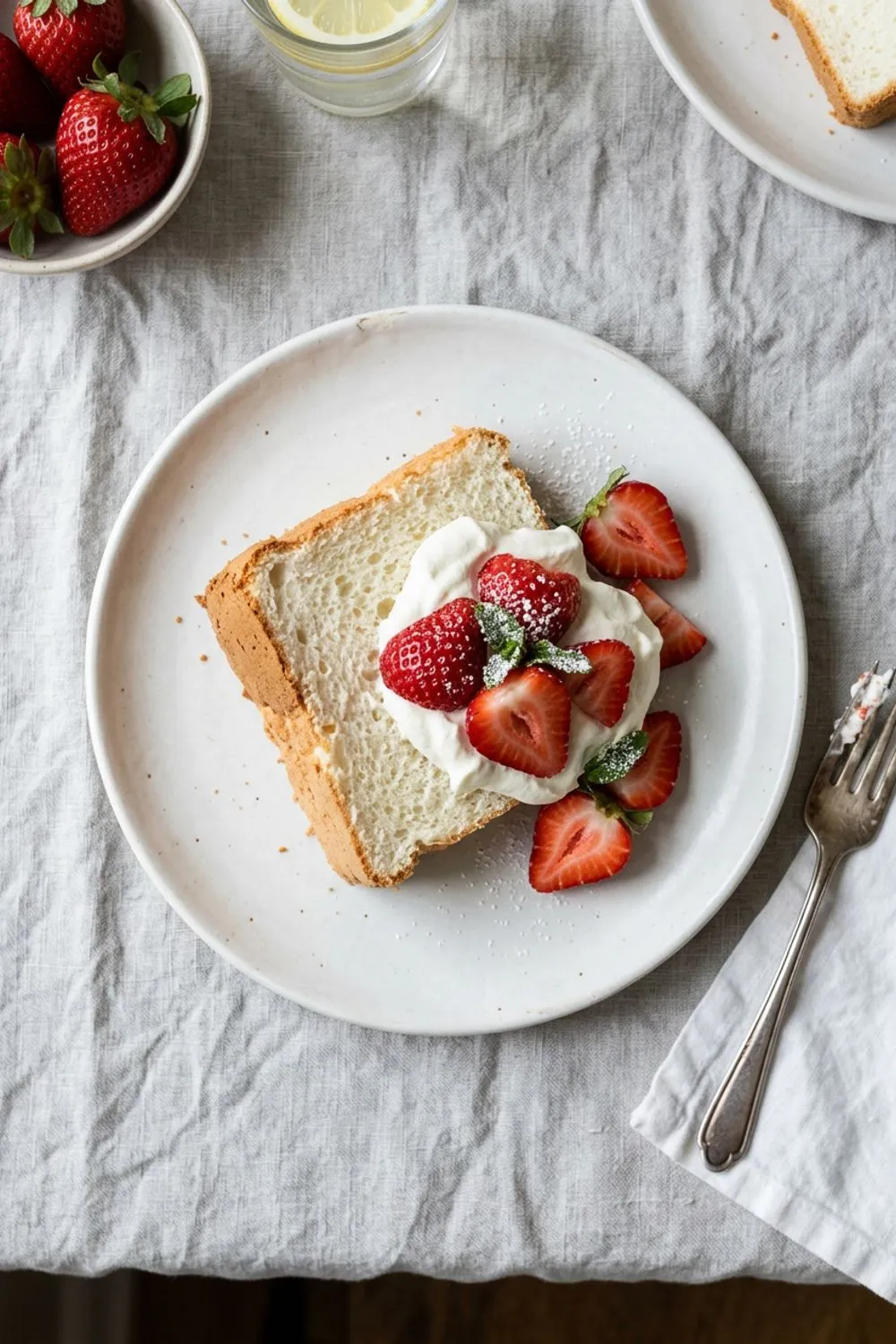
With fresh berries: This is the classic pairing, and for good reason. The bright acidity of strawberries, raspberries, or blueberries cuts through the sweetness perfectly. Macerate the berries in a little sugar for 30 minutes before serving for extra juiciness.
With whipped cream: Lightly sweetened whipped cream is a natural companion. Keep it simple — heavy cream, a tablespoon of sugar, a splash of vanilla.
With lemon curd: Spread a layer of homemade lemon curd between slices for a stunning dessert that balances sweet with tart. This is one of my favorite ways to serve it at dinner parties.
Toasted: Yes, you can toast angel food cake. Slice it, brush lightly with melted butter, and grill or toast until golden. The exterior becomes crispy while the inside stays pillow-soft. Serve with ice cream for an incredible contrast.
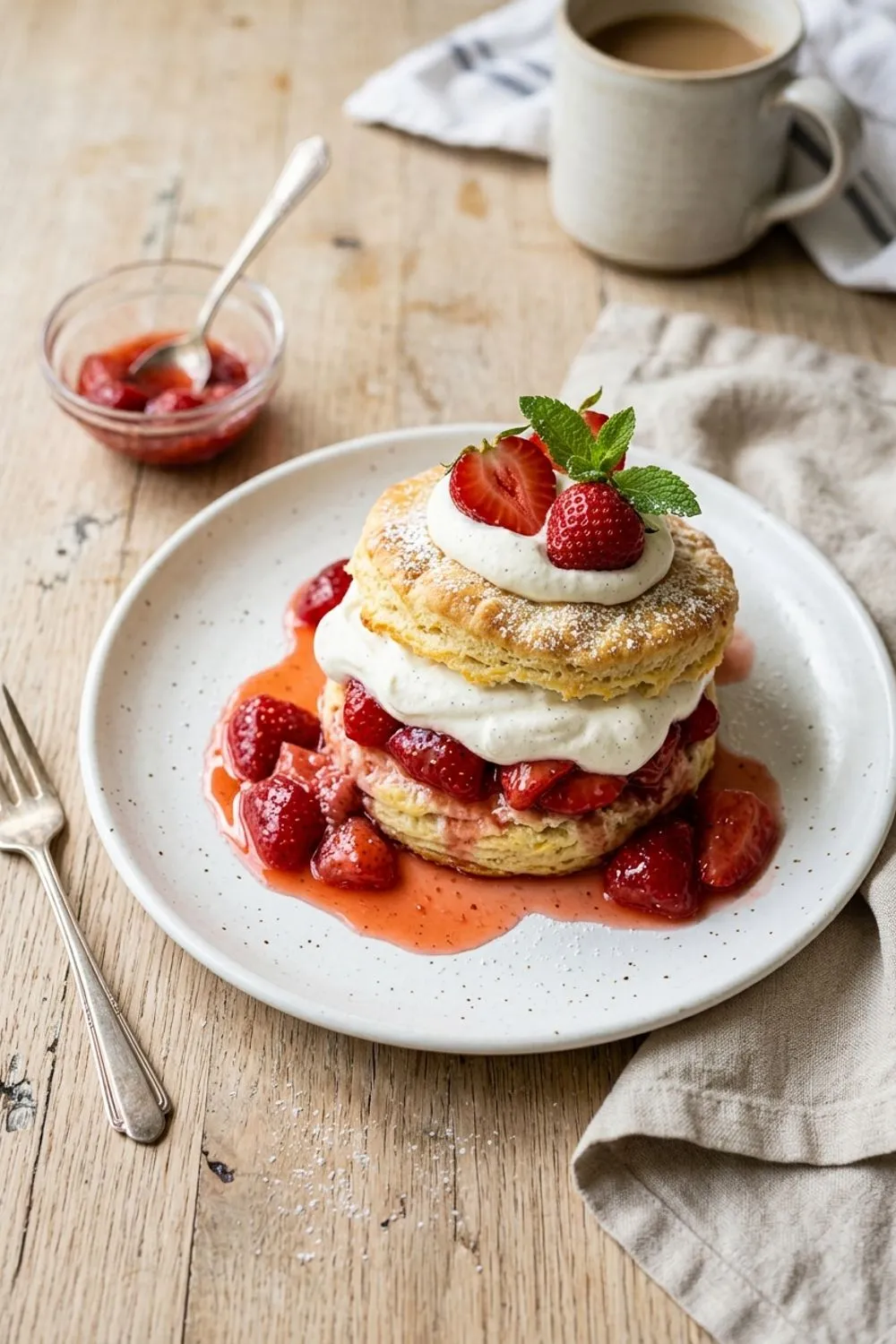
If you love the fresh berry pairing, you should also try my strawberry shortcake — it takes a different approach but shares the same spirit of letting simple, beautiful ingredients shine.
Variations to Explore
Chocolate angel food cake: Replace 1/4 cup of the cake flour with unsweetened cocoa powder. Sift it together with the flour and sugar as directed. The result is a light, chocolatey cloud that pairs magnificently with raspberry sauce.
Citrus angel food cake: Add the finely grated zest of 2 lemons or 1 orange to the sugar before adding it to the egg whites. The oils in the zest perfume the entire cake with bright citrus fragrance.
Coconut angel food cake: Fold 1/2 cup of finely shredded unsweetened coconut into the batter at the very end, along with 1/2 teaspoon of coconut extract. Toast additional coconut to press onto the outside of the finished cake.
Storage Tips
Room temperature: Angel food cake keeps well in an airtight container or wrapped in plastic wrap for up to 3 days. Because it contains no fat, it can dry out more quickly than butter-based cakes, so sealing it well is important.
Refrigerator: Not recommended unless the cake is topped with something perishable like whipped cream. The fridge tends to dry out angel food cake and can make it stale.
Freezer: Wrap the uncut cake tightly in plastic wrap, then foil, and freeze for up to 2 months. Thaw at room temperature still wrapped — the condensation will be absorbed back into the cake rather than pooling on the surface.
Troubleshooting Your Angel Food Cake
Cake is dense and chewy: The egg whites were likely underwhipped, or the flour was folded in too aggressively. Make sure you reach stiff, glossy peaks before folding, and use a gentle hand during incorporation.
Large holes in the crumb: These air pockets are caused by bubbles in the batter that were not released before baking. Run a knife through the batter in the pan in a zigzag pattern to pop large bubbles.
Cake shrank after cooling: The cake may have been underbaked, or it was not cooled upside down long enough. Make sure a skewer comes out completely clean before removing from the oven, and cool for at least 90 minutes inverted.
Top cracked excessively: The oven temperature may have been too high. Angel food cake should bake at 325°F — any hotter and the outside sets too quickly while the inside is still expanding, causing deep cracks.
Making Angel Food Cake for Special Occasions
Angel food cake is one of the most crowd-pleasing desserts you can bring to a gathering. It is naturally low in fat and calories — just 160 calories per generous slice — which means even the most health-conscious guests can enjoy it without guilt. It also happens to be naturally dairy-free, making it a wonderful option for guests with lactose intolerance.
For a stunning presentation at dinner parties, I like to serve the whole cake on a pedestal stand, surrounded by a ring of fresh mixed berries. I set out bowls of whipped cream, lemon curd, and chocolate sauce so guests can customize their slices. This dessert station approach is not only beautiful but also incredibly easy for the host, since the cake itself is baked well ahead of time.
For summer gatherings, try filling the center of the cake with fresh berries and whipped cream. Cut a trench about an inch deep around the top of the cake using a serrated knife, fill it with sweetened whipped cream, and pile berries on top. When you slice into it, each piece comes with a generous portion of fruit and cream that makes the presentation absolutely showstopping.
During the holidays, a simple dusting of powdered sugar over the top creates an elegant, snow-dusted appearance that is perfectly festive. You can also serve slices with warm cranberry compote for a seasonal twist that bridges the line between light and celebratory.
What to Do with 12 Egg Yolks
A dozen leftover egg yolks is a significant amount of valuable kitchen gold, so plan ahead. You can make a batch of rich vanilla custard or pastry cream, homemade lemon curd (which pairs perfectly with the angel food cake itself), fresh pasta dough, or a double batch of ice cream base. Egg yolks also make exceptionally rich scrambled eggs, carbonara sauce, or hollandaise. If you cannot use them right away, egg yolks keep in the refrigerator for 2-3 days in an airtight container with a thin layer of water on top to prevent a skin from forming, or you can freeze them for up to 3 months.
A Cake Worth Mastering
Angel food cake rewards patience and precision in a way that few other recipes do. There is a real sense of accomplishment when you unmold that first perfect cake — tall, golden, and impossibly light. It is a reminder that baking is as much about technique as it is about ingredients, and that sometimes the most impressive results come from the simplest starting points.
This is a cake I return to whenever I want something that feels special without being heavy or overly sweet. It is the cake I bring to summer gatherings, the cake I pair with seasonal fruit, and the cake that always, always impresses. I hope it brings the same satisfaction to your kitchen that it continues to bring to mine.
For the complete opposite experience in the best possible way, try my classic pound cake — where angel food is all air and lightness, pound cake is pure butter and density, and they are both absolutely magnificent.
Never Miss a Sweet Recipe
Join 5,000+ home bakers and get new recipes straight to your inbox.
Ingredients
Instructions
- 1
Prepare the Flour and Sugar
Preheat your oven to 325°F (165°C). Have an ungreased 10-inch tube pan ready — do not grease it, as the batter needs to cling to the sides to rise. Sift the cake flour with 3/4 cup of the sugar three times. This triple-sifting aerates the mixture and ensures it folds into the egg whites without deflating them.
- 2
Whip the Egg Whites
In a very clean, dry, large bowl, beat the egg whites with a stand mixer or hand mixer on medium speed until foamy. Add the cream of tartar and salt, then increase to medium-high speed. Continue beating until soft peaks form — the whites should droop gently when the whisk is lifted.
- 3
Add the Sugar Gradually
With the mixer running on medium-high, add the remaining 3/4 cup of sugar one tablespoon at a time, beating for about 10 seconds between each addition. Continue beating until stiff, glossy peaks form. Add the vanilla and almond extracts and beat briefly to combine.
- 4
Fold in the Flour Mixture
Sift about one-quarter of the flour-sugar mixture over the beaten whites. Using a large rubber spatula, fold gently — cut down through the center, sweep along the bottom, and fold up and over. Rotate the bowl and repeat. Add the remaining flour mixture in three more additions, folding gently each time. Work quickly but carefully to preserve as much air as possible.
- 5
Bake the Cake
Gently spoon the batter into the ungreased tube pan, smoothing the top. Run a knife through the batter in a zigzag pattern to release any large air bubbles. Bake for 35-40 minutes, until the top is golden brown, springs back when pressed, and a skewer comes out clean.
- 6
Cool Upside Down
Immediately invert the pan onto its legs or over the neck of a bottle. Let the cake cool completely upside down — this takes at least 1.5 hours. Cooling inverted prevents the delicate cake from collapsing under its own weight. Once cool, run a thin knife around the edges and center tube to release the cake.
Nutrition Information
Per serving (serves 12). Values are approximate.
| Calories | 160 calories |
| Total Fat | 0.5g |
| Saturated Fat | 0g |
| Carbohydrates | 35g |
| Sugar | 26g |
| Protein | 5g |
| Sodium | 110mg |
| Fiber | 0g |
* Percent Daily Values are based on a 2,000 calorie diet. Your daily values may be higher or lower depending on your calorie needs. Nutritional information is an estimate and may vary.
Frequently Asked Questions
Why does angel food cake have to cool upside down?
Angel food cake has a very delicate structure that relies on trapped air bubbles. If it cools right-side up, the weight of the cake compresses those bubbles and the cake deflates significantly. Cooling upside down keeps the full height and airy texture intact.
Can I use a regular cake pan?
You need a tube pan (also called an angel food cake pan) for this recipe. The center tube provides structural support and allows heat to reach the middle of the cake. A bundt pan with a nonstick coating will not work because the batter cannot cling to the sides.
What do I do with all the leftover egg yolks?
Make custard, lemon curd, hollandaise sauce, pasta dough, or ice cream base. Egg yolks keep in the refrigerator for 2-3 days or can be frozen for up to 3 months.
Why did my angel food cake fall?
Common causes include underbeating the egg whites, folding too aggressively (deflating the air), using a greased pan, or opening the oven door too early. Make sure to follow each step carefully for the best rise.

Reader Reviews
Based on 145 reviews