Cakes & Cupcakes
Classic Vanilla Layer Cake
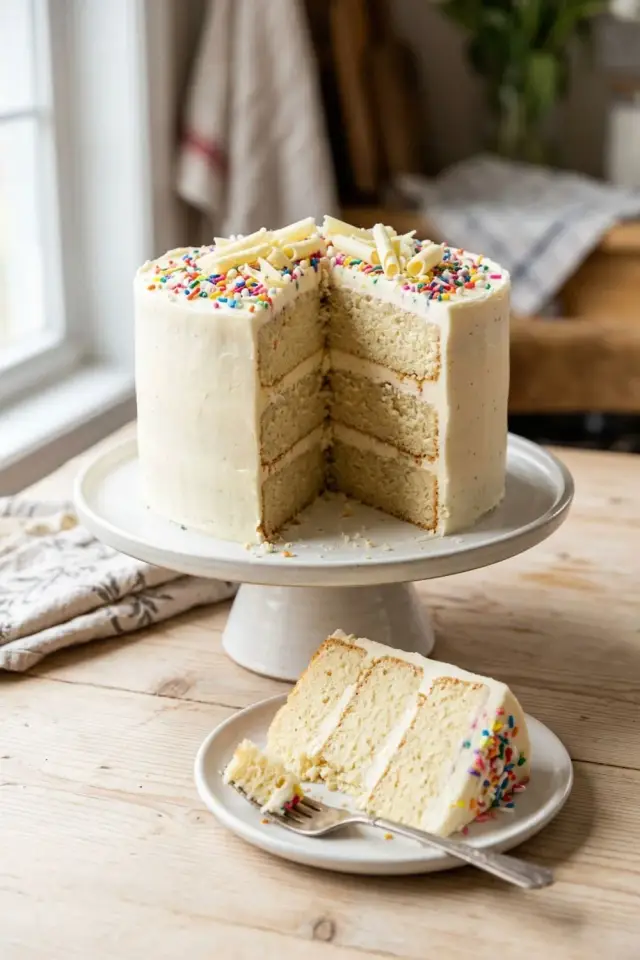
A tall, tender vanilla layer cake with silky vanilla buttercream frosting. The ultimate birthday cake and celebration centerpiece.
The Birthday Cake Everyone Asks For
This is the recipe that anchors my entire baking collection — the one that gets requested for every birthday and celebration. A great vanilla cake has nowhere to hide, unlike chocolate cake with its cocoa or carrot cake with its spices. Every flaw shows up immediately, which is why getting the fundamentals right matters so much. This recipe nails them: the crumb is impossibly tender, the flavor is pure warm vanilla, and the buttercream tastes like the best vanilla ice cream in frosting form.
Baker’s Tips
- Use cake flour, not all-purpose — the lower protein content produces a velvety, cloud-like crumb that is immediately noticeable in the first bite.
- Every ingredient should be at room temperature before you begin — cold ingredients cause butter to seize into lumps, creating uneven texture throughout the cake.
- Apply a thin crumb coat of frosting first, refrigerate 15 minutes, then apply the final coat — this traps loose crumbs and gives you a smooth, professional finish.
- Divide batter by weight using a kitchen scale, not by eye — even layers make all the difference in the final presentation.
Variations
- Lemon Cake: Add 2 tablespoons of lemon zest to the dry ingredients and swap 1/4 cup of milk for fresh lemon juice for a bright spring cake.
- Confetti Cake: Fold 1/3 cup rainbow jimmies (not nonpareils, which bleed) into the finished batter for the ultimate birthday cake.
- Almond Cake: Replace vanilla extract with 1-1/2 teaspoons almond extract in both the cake and frosting, and layer with raspberry jam.
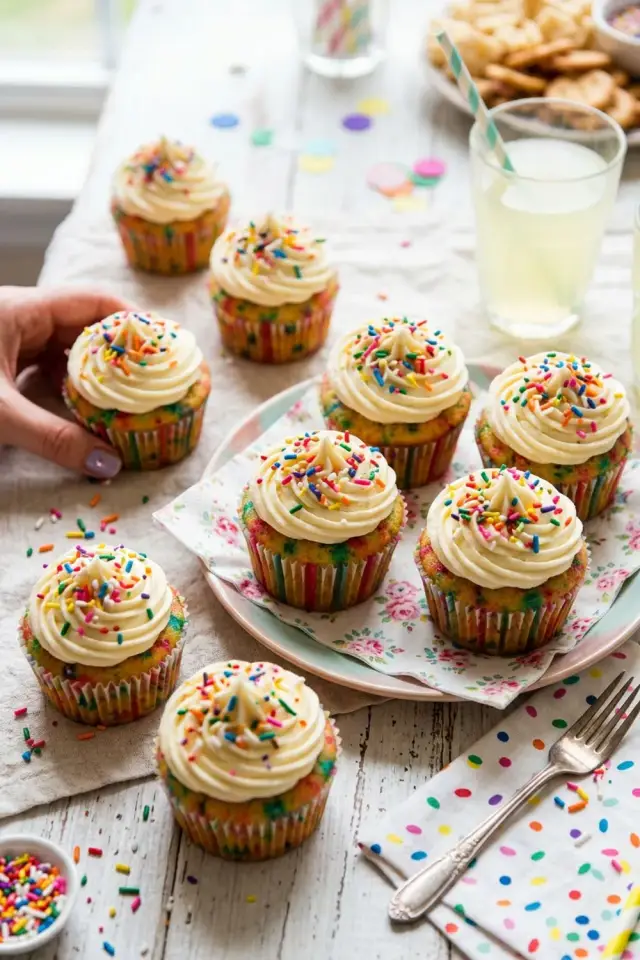
For a cupcake version of this vanilla base, try my funfetti cupcakes.
Ingredients
Vanilla cake
Vanilla buttercream
Instructions
- 1
Prepare the pans and dry ingredients
Preheat your oven to 350°F (175°C). Grease three 8-inch round cake pans, line the bottoms with parchment paper circles, then grease and flour the parchment and sides. In a large bowl, whisk together the sifted cake flour, sugar, baking powder, and salt until well combined.
- 2
Mix using the reverse creaming method
Add the room temperature butter to the dry ingredients and mix on low speed until the mixture resembles coarse, damp sand — about 2 minutes. In a separate measuring cup, whisk together the egg whites, whole eggs, milk, oil, and vanilla. Add half of the wet mixture to the sandy flour mixture and beat on medium speed for 2 minutes to build structure. Scrape the bowl, then add the remaining wet mixture in two additions, beating for 30 seconds after each.
- 3
Divide and bake
Divide the batter evenly among the three prepared pans — a kitchen scale helps here, aiming for about 14-15 ounces per pan. Smooth the tops with an offset spatula. Bake for 24-28 minutes, until the tops spring back when lightly pressed and a toothpick inserted in the center comes out clean. Do not overbake.
- 4
Cool the layers
Let the cakes cool in their pans on wire racks for 10 minutes. Run a thin knife around the edges, then invert onto the racks. Peel off the parchment paper and let cool completely — at least 1 hour. The layers must be completely cool before frosting, or the buttercream will melt.
- 5
Make the vanilla buttercream
Beat the room temperature butter on medium-high speed for 5 minutes until very pale and fluffy. Add the sifted powdered sugar one cup at a time, beating on low after each addition. Add the vanilla extract and salt. Increase speed to medium-high and beat for 3 minutes. Add heavy cream one tablespoon at a time until you reach a smooth, spreadable consistency.
- 6
Level the cake layers
Using a long serrated knife or a cake leveler, trim the domed tops off each layer to create flat, even surfaces. Save the scraps for snacking or cake pops. Place the first layer on a cake board or serving plate, cut-side up.
- 7
Assemble and frost
Spread about 3/4 cup buttercream over the first layer in an even coating. Place the second layer on top and repeat. Add the third layer, top-side down for the flattest surface. Apply a thin crumb coat of frosting over the entire cake and refrigerate for 15 minutes. Then apply the final coat of frosting, using an offset spatula to smooth the sides and top. Decorate with swirls, rosettes, or sprinkles as desired.
Nutrition Information
Per serving (serves 12). Values are approximate.
| Calories | 380 calories |
| Total Fat | 18g |
| Saturated Fat | 11g |
| Carbohydrates | 52g |
| Sugar | 40g |
| Protein | 4g |
| Sodium | 190mg |
| Fiber | 0g |
* Percent Daily Values are based on a 2,000 calorie diet. Your daily values may be higher or lower depending on your calorie needs. Nutritional information is an estimate and may vary.
Never Miss a Sweet Recipe
Join 5,000+ home bakers and get new recipes straight to your inbox.
Frequently Asked Questions
Can I use all-purpose flour instead of cake flour?
You can make a substitute by measuring 2-1/2 cups all-purpose flour, removing 5 tablespoons, and replacing them with 5 tablespoons cornstarch. Sift the mixture three times. The texture will be very close to cake flour, though true cake flour will still yield a slightly more tender crumb.
How do I prevent my cake layers from doming?
Doming happens because the edges of the batter set before the center, forcing it to rise upward. To minimize this, wrap the outside of each pan with dampened cake strips (or make your own from strips of damp towel secured with foil). Lower your oven temperature by 25°F and bake a few minutes longer. These steps promote more even rising.
How do I level cake layers properly?
Let the layers cool completely. Place one layer on a flat surface and hold a long serrated knife horizontally at the height where you want to cut. Rotate the cake slowly while keeping the knife steady, letting the blade do the work. A cake turntable makes this much easier. Alternatively, invest in an adjustable cake leveler for perfectly even cuts every time.
Reader Reviews
Based on 493 reviews