Chocolate
Chocolate Bark
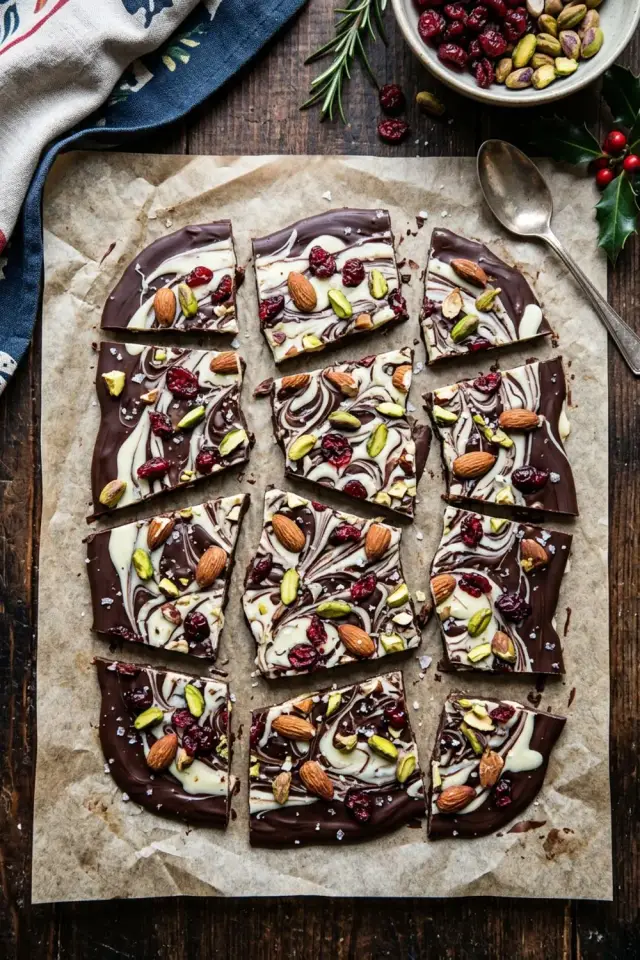
Stunning layered chocolate bark loaded with almonds, pistachios, dried cranberries, and flaky sea salt. A beautiful no-bake treat that takes just minutes to make.
Stunning Homemade Chocolate in 15 Minutes
Chocolate bark is proof that impressive does not have to mean difficult. A slab of melted chocolate covered in beautiful things and broken into rustic pieces — no baking, no tempering, and no way to fail. I make it constantly as a holiday gift, a potluck contribution, and a weeknight treat. The combination of dark and white chocolate swirls with jewel-toned cranberries, emerald pistachios, and golden almonds looks like something from a luxury chocolate shop, but it costs a fraction and takes only 15 minutes of active time.
Baker’s Tips
- Use dark chocolate in the 60-70% cacao range for the base. Higher than 70% can taste astringent, and lower than 60% will be too sweet.
- When swirling the white chocolate, stop after 3-4 passes. Too much swirling blends the colors into muddy brown — you want clear contrast.
- Press toppings gently into the wet chocolate so they adhere when the bark is broken. If they just sit on top, they will fall off.
- Store in an airtight container at cool room temperature for up to 3 weeks, or in the refrigerator for up to 1 month. The flaky sea salt is not optional — it transforms the bark from good to extraordinary.
Variations
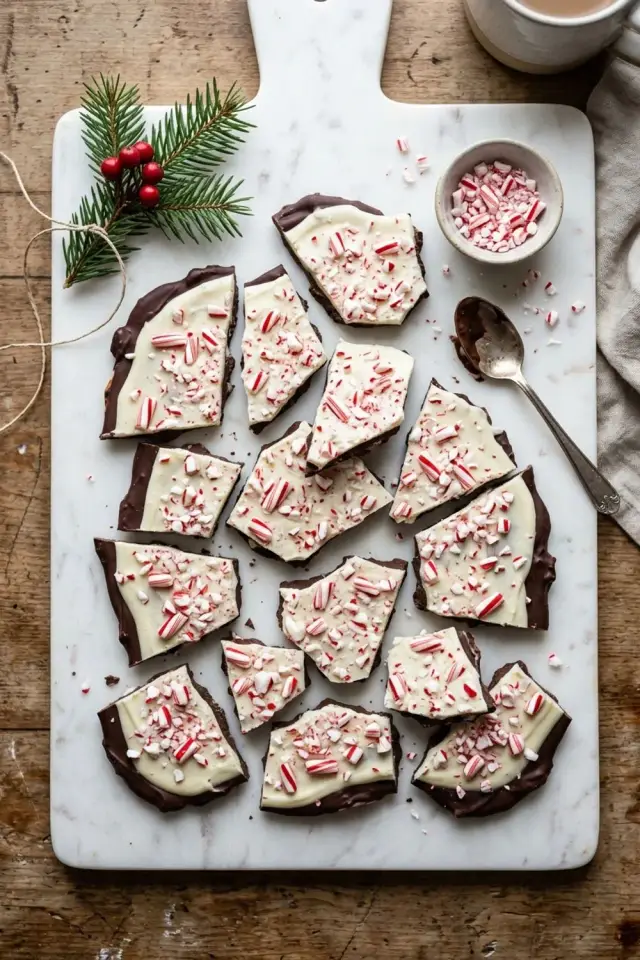
- Holiday Peppermint: Use white chocolate as the base, spread dark chocolate on top once set, and sprinkle with crushed candy canes for a festive classic.
- Tropical: Use milk chocolate as the base and top with toasted coconut flakes, chopped macadamia nuts, and dried mango pieces.
- Espresso: Sprinkle whole roasted coffee beans and cocoa nibs over the dark chocolate base, finish with a light dusting of espresso powder.
From here, you can graduate to my chocolate truffles which use similar techniques with slightly more finesse.
Ingredients
Dark Chocolate Layer
White Chocolate Swirl
Toppings
Instructions
- 1
Prepare Your Surface
Line a large rimmed baking sheet with parchment paper or a silicone baking mat. Have all your toppings measured and ready in small bowls within easy reach — once the chocolate is spread, you need to work quickly before it sets.
- 2
Melt the Dark Chocolate
Combine the chopped dark chocolate and 1 tablespoon coconut oil in a microwave-safe bowl. Microwave in 30-second intervals, stirring after each, until completely smooth and glossy — usually 3 to 4 intervals. Alternatively, melt over a double boiler. The chocolate should be fluid and warm but not hot.
- 3
Spread the Base Layer
Pour the melted dark chocolate onto the prepared baking sheet. Using an offset spatula, spread it into a roughly 10x14-inch rectangle, about 1/4 inch thick. The edges can be rustic and uneven — this adds character to the finished bark.
- 4
Add the White Chocolate Swirl
Melt the white chocolate with 1 teaspoon coconut oil using the same microwave method. Drizzle it in lines or dollops over the dark chocolate layer. Using a toothpick or the tip of a knife, swirl the white chocolate into the dark in a decorative marble pattern. Do not over-swirl — 3 to 4 passes is enough. You want distinct, visible contrast.
- 5
Add the Toppings
While the chocolate is still wet, scatter the chopped almonds, pistachios, and dried cranberries evenly over the surface. Gently press the larger pieces into the chocolate so they adhere. Finish with a sprinkle of flaky sea salt over the entire surface.
- 6
Set and Break Into Pieces
Let the bark set at room temperature for about 1 hour, or refrigerate for 20–30 minutes until completely firm. Once set, break or cut the bark into irregular pieces of varying sizes. The rustic, jagged edges are part of the charm.
Nutrition Information
Per serving (serves 20). Values are approximate.
| Calories | 140 calories |
| Total Fat | 9g |
| Saturated Fat | 5g |
| Carbohydrates | 14g |
| Sugar | 11g |
| Protein | 2g |
| Sodium | 40mg |
| Fiber | 1g |
* Percent Daily Values are based on a 2,000 calorie diet. Your daily values may be higher or lower depending on your calorie needs. Nutritional information is an estimate and may vary.
Never Miss a Sweet Recipe
Join 5,000+ home bakers and get new recipes straight to your inbox.
Frequently Asked Questions
Why did my white chocolate seize when melting?
White chocolate is more temperamental than dark chocolate because it has a higher sugar content and lower cocoa butter content. Use lower microwave power (50%) and shorter intervals (20 seconds). Even a tiny drop of water will cause it to seize. If it does seize, add 1 teaspoon of coconut oil and stir vigorously.
Can I use milk chocolate instead of dark?
Absolutely. Milk chocolate creates a sweeter, milder bark. The contrast with white chocolate will be less dramatic visually, but the flavor is wonderful. You can also use all dark, all milk, or all white — the toppings provide variety regardless.
How thick should the bark be?
About 1/4 inch is ideal — thick enough to snap satisfyingly but thin enough to eat comfortably. Thinner bark is more delicate and elegant. Thicker bark is more substantial and candy-like.

Reader Reviews
Based on 314 reviews