Holiday & Seasonal
Gingerbread Cookies

Why You’ll Love These Gingerbread Cookies
There is something about gingerbread cookies that makes the holiday season feel complete. The warm scent of ginger, cinnamon, and cloves drifting through the kitchen, the satisfying snap of a perfectly baked cookie, and the pure joy of decorating them with family — it all adds up to one of my favorite traditions. I have been perfecting this recipe for the better part of a decade, and I am finally confident that this is the one. This is the gingerbread cookie recipe that delivers every single time.
What sets this recipe apart from others you may have tried is the balance of spice and sweetness. Many gingerbread recipes lean too heavily on the molasses, which can make the cookies taste almost bitter. Others go too light on the spices, leaving you with a plain brown sugar cookie that barely whispers of the holidays. This version hits that perfect middle ground: bold enough to taste like real gingerbread, sweet enough that kids and adults alike reach for seconds, and sturdy enough to hold up beautifully under a generous coat of royal icing.
I first started making these cookies when my daughter was about four years old. She wanted to decorate gingerbread men for Santa, and I realized I did not actually have a go-to recipe. I tried three different versions that first year, and none of them were quite right. One batch spread into shapeless blobs. Another was so hard you could practically use the cookies as coasters. The third tasted wonderful but crumbled the moment you tried to pick one up. It took a few more holiday seasons of tweaking and testing, but eventually I landed on this formula, and it has been our family recipe ever since.
The Secret to Perfect Gingerbread Dough
The single most important thing I can tell you about gingerbread cookies is this: do not skip the chilling time. I know it is tempting to roll out the dough right away, especially when you have eager little helpers bouncing around the kitchen. But that hour in the refrigerator is doing critical work. It firms up the butter so your cookies hold their shape, and it hydrates the flour so the texture is even and smooth.
If you are in a real hurry, you can pop the wrapped dough discs in the freezer for about 20 minutes instead of refrigerating for an hour. But honestly, I find that using the chilling time to clean up the kitchen and set out my cookie cutters makes the whole process feel less rushed. Baking should be enjoyable, not a race.
When it comes to rolling out the dough, flour your surface and your rolling pin generously but not excessively. You want just enough flour to prevent sticking without adding so much that the dough becomes dry. I aim for a consistent quarter-inch thickness because that gives you cookies that are sturdy enough for decorating but still have a slight chew in the center. If you prefer a crispier cookie, roll them a bit thinner. If you like them softer, go a touch thicker, but add a minute or two to the baking time.
One technique that has saved me a lot of frustration is rolling the dough between two sheets of parchment paper. This prevents sticking without needing extra flour, and you can slide the whole sheet onto a cutting board and pop it in the fridge if the dough starts getting too warm while you are cutting shapes. Warm dough sticks to cookie cutters and tears easily, so keeping everything cool is your best friend throughout this process.
Getting the Spice Balance Right
The spice blend in gingerbread is really a matter of personal preference, but after testing many ratios, I settled on a combination that gives you warmth without heat. The ginger is the star, of course — two full teaspoons of ground ginger gives these cookies their characteristic flavor. The cinnamon plays a supporting role, adding familiar warmth and sweetness. The cloves and nutmeg are used sparingly because both can become overpowering quickly.
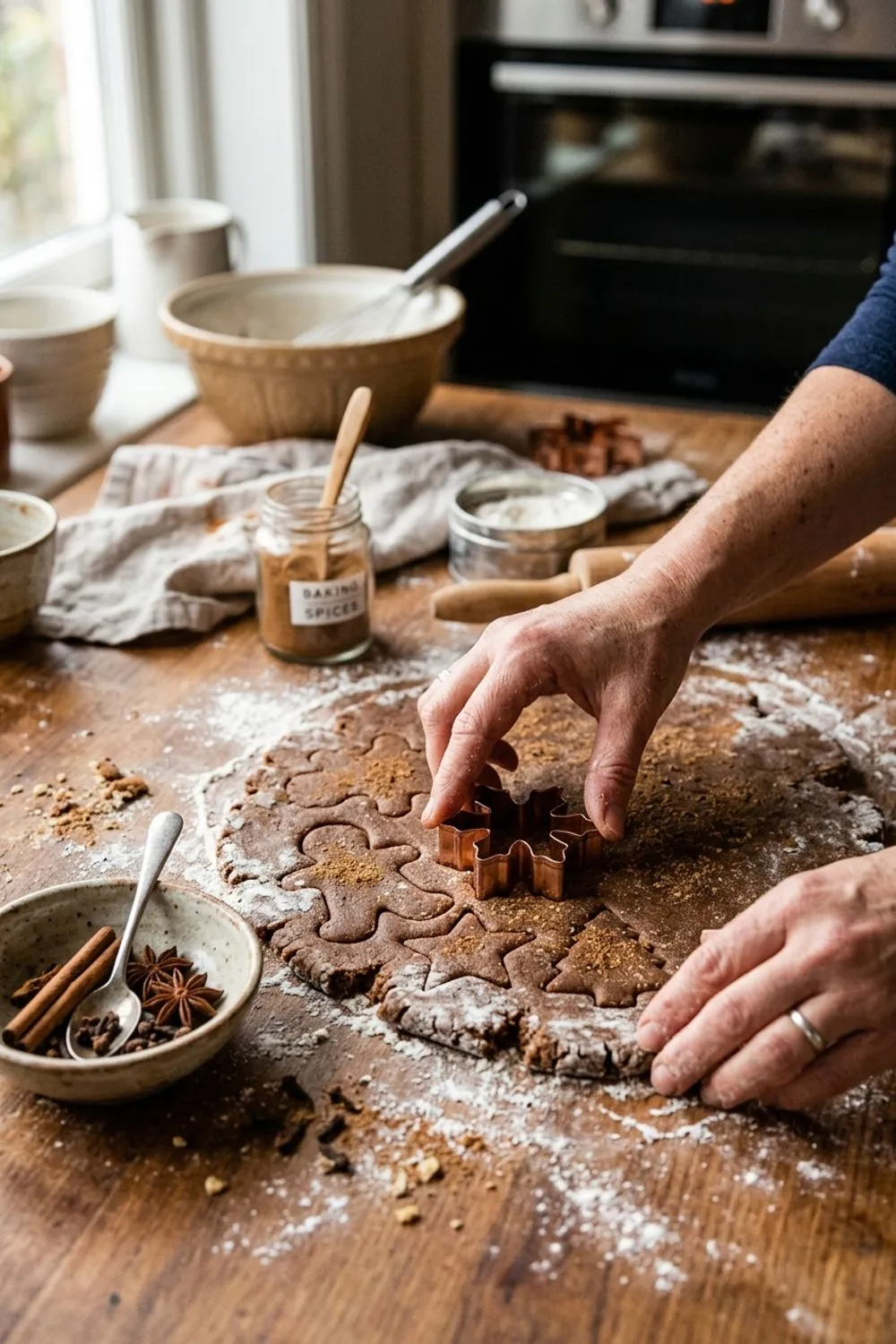
If you love a really spicy gingerbread, you can bump the ginger up to a tablespoon and add a pinch of black pepper. Some bakers swear by adding a tiny bit of white pepper for extra heat without changing the color. I have tried both approaches and they are lovely, but for a crowd-pleasing recipe that works for everyone from toddlers to grandparents, I keep the spice level moderate.
The molasses deserves a moment of attention too. I specify unsulphured molasses because it has a cleaner, more straightforward sweetness compared to sulphured varieties. Whatever you do, do not use blackstrap molasses — it is far too bitter and will overpower everything else in the dough. If you cannot find unsulphured molasses, regular or mild molasses from any grocery store will work fine.
Baking Tips That Make All the Difference
Oven temperature is crucial for gingerbread cookies. At 350 degrees Fahrenheit, you get cookies that set firmly around the edges while staying slightly soft in the center. If your oven runs hot, drop the temperature by 10 degrees. I always bake a test cookie first — just one single cookie on the sheet — to check that the temperature is right and the timing works with my oven.
The tricky thing about gingerbread is that the cookies look almost the same going into the oven as they do coming out. They do not turn golden brown like sugar cookies because the dough is already dark from the molasses. What you are looking for is a slight puffing during baking followed by a gentle settling as they cool. The edges should feel firm when you touch them lightly with a fingertip, and the surface should look matte rather than shiny.
Pull them from the oven when they seem just barely done. Overbaked gingerbread becomes rock-hard once it cools, and there is no fixing that. Slightly underbaked gingerbread, on the other hand, firms up beautifully as it cools and gives you that wonderful combination of crisp edges and tender centers.
Let the cookies cool on the baking sheet for a full five minutes before transferring them to a wire rack. Moving them too soon can cause breakage, especially with intricate shapes like gingerbread men with thin arms and legs.
The Royal Icing That Actually Works
I have tried many royal icing recipes over the years, and the meringue powder version is hands down the most reliable. It gives you a smooth, glossy icing that dries hard with a satisfying snap. The key is beating it long enough — a full five to seven minutes on medium-high speed. It should hold stiff peaks that do not droop when you lift the beater.
For outlining cookies, use the icing at stiff peak consistency. For flooding — filling in large areas with a smooth, even coat — thin a portion of the icing with a few drops of water at a time until it has the consistency of thick syrup. You should be able to drizzle it from a spoon and have the ribbon disappear into the surface within about 10 seconds.
The two-step decorating method of outlining first and then flooding gives you the cleanest results. Pipe your outline, wait about 10 minutes for it to set slightly, then squeeze the flood icing into the center and use a toothpick or scribe tool to guide it into the corners and along the edges. Tap the cookie gently on the counter to pop any air bubbles and settle the icing into an even layer.
If you want to add details like buttons on a gingerbread man or swirls on an ornament shape, you can pipe those on immediately while the flood icing is wet for a smooth, blended look, or wait until the flood layer is completely dry for raised details that stand out. Both approaches look beautiful.
Variations Worth Trying
Chocolate gingerbread: Replace two tablespoons of flour with Dutch-process cocoa powder for a deeply chocolatey twist on the classic. The cocoa pairs surprisingly well with the warm spices, and the cookies come out nearly black — very dramatic for Halloween or a more sophisticated holiday cookie platter.
Orange gingerbread: Add the finely grated zest of one large orange to the dough along with the wet ingredients. The citrus brightens up the warm spices and adds a lovely fragrance. These are wonderful dipped in dark chocolate instead of decorated with icing.
Sandwich cookies: Spread a thin layer of cream cheese frosting or lemon curd between two smaller gingerbread cookies for an irresistible sandwich cookie. These are a huge hit at cookie exchanges and always disappear first. You might also enjoy my Christmas sugar cookies if you love holiday baking.
Gluten-free version: I have had good results substituting a one-to-one gluten-free flour blend for the all-purpose flour. Add an extra quarter teaspoon of xanthan gum if your blend does not already contain it. The texture is slightly more delicate, but the flavor is spot on.
How to Store Gingerbread Cookies
Undecorated cookies: Store in an airtight container at room temperature for up to two weeks. They actually improve over the first day or two as the spices mellow and the flavors deepen.
Decorated cookies: Layer between sheets of parchment or wax paper in an airtight container. They will last two to three weeks at room temperature. Make sure the royal icing is completely dry before stacking or the designs will smudge.
Freezing the dough: Wrap the discs tightly in plastic wrap, then place in a freezer bag. The dough freezes beautifully for up to three months. Thaw overnight in the refrigerator before rolling.
Freezing baked cookies: Undecorated cookies freeze well for up to three months in airtight containers. I do not recommend freezing decorated cookies because the icing can become sticky during thawing.
Making These with Kids
Gingerbread cookie decorating is one of the best kitchen activities to do with children, and I have learned a few things over the years that make it go more smoothly. First, do all the dough-making and baking yourself ahead of time so the kids only need to focus on the fun part — decorating. Second, set out small bowls of icing in different colors along with sprinkles, mini candies, and other decorations on a tray so everything is within reach.
Give each child their own plate or sheet of parchment paper as a work surface, and accept from the start that their cookies will not look like the ones on Pinterest. The point is the experience, not perfection. Some of my most treasured cookies over the years have been the ones my daughter decorated when she was little — lopsided smiles, an excessive amount of sprinkles, and icing that was more on her hands than on the cookie. Those are the ones I remember.
If you are doing this with very young children, consider skipping the piping bags entirely and putting the icing in squeeze bottles instead. They are much easier for small hands to control, and you avoid the frustration of burst piping bags.
Troubleshooting Common Issues
Cookies spreading too much: Your dough was too warm. Chill it longer next time, and make sure your butter was only softened, not melting. Also check your baking soda — if it is old, it can cause excess spreading.
Cookies are too hard: They were overbaked. Reduce your baking time by one to two minutes, and remember that gingerbread firms up significantly as it cools. Pull them when they still seem slightly soft.
Dough cracking when rolling: It is too cold. Let it sit at room temperature for five to ten minutes before rolling. You can also knead it briefly with your hands to warm it slightly.
Icing not drying: High humidity is the usual culprit. If your kitchen is humid, point a fan at the decorated cookies or move them to a drier room. You can also place them in an oven that has been preheated to 175 degrees Fahrenheit and then turned off — the residual warmth helps the icing set.
I love pairing these cookies with a batch of my sugar cookies for a really impressive holiday cookie platter. Together they cover both the spiced and the buttery sweet sides of the cookie spectrum, and they look beautiful arranged together on a large platter or packaged in cellophane bags as gifts.
Why This Recipe Works Every Time
The combination of dark brown sugar and molasses gives these cookies their characteristic deep flavor and chewy texture. The butter-to-flour ratio keeps them sturdy without being dry, and the careful balance of spices means they taste like gingerbread — not like a spice cabinet exploded. Chilling the dough is the non-negotiable step that ensures clean edges and perfect shapes every time.
Whether you are making these for a holiday party, a school bake sale, a cookie exchange, or just a cozy afternoon at home, this recipe will not let you down. It is the kind of recipe that becomes a tradition, and honestly, that is the highest compliment any recipe can receive.
Never Miss a Sweet Recipe
Join 5,000+ home bakers and get new recipes straight to your inbox.
Ingredients
Cookie Dough
Royal Icing for Decorating
Instructions
- 1
Mix the Dry Ingredients
In a large bowl, whisk together the flour, baking soda, ginger, cinnamon, cloves, nutmeg, and salt. Set aside.
- 2
Cream Butter and Sugar
In a stand mixer fitted with the paddle attachment, beat the softened butter and dark brown sugar on medium speed for 2-3 minutes until light and fluffy. Add the egg and beat until combined, then mix in the molasses and vanilla extract on low speed until smooth.
- 3
Form the Dough
Gradually add the dry ingredients to the wet mixture, mixing on low speed until just combined. The dough will be soft and slightly sticky. Divide dough in half, flatten into discs, wrap in plastic wrap, and refrigerate for at least 1 hour or up to 2 days.
- 4
Roll and Cut
Preheat oven to 350°F (175°C) and line baking sheets with parchment paper. Roll out dough on a lightly floured surface to 1/4-inch (6mm) thickness. Cut into shapes using cookie cutters, placing cookies 1 inch apart on prepared sheets.
- 5
Bake the Cookies
Bake for 9-11 minutes until the edges are set and just starting to firm up. The centers may look slightly underdone — they will continue to set as they cool. Let cookies cool on the baking sheet for 5 minutes, then transfer to a wire rack to cool completely.
- 6
Make the Royal Icing
Combine sifted powdered sugar and meringue powder in a stand mixer. Add 5 tablespoons of warm water and beat on low speed until combined, then increase to medium-high and beat for 5-7 minutes until stiff peaks form. Add more water by the teaspoon if needed. Divide and tint with food coloring as desired.
- 7
Decorate
Transfer icing to piping bags fitted with small round tips. Outline cookies first, let dry for 10 minutes, then flood the interior with thinned icing. Add details, sprinkles, and decorations while the icing is still wet. Let cookies dry for at least 2 hours until the icing is completely set.
Nutrition Information
Per serving (serves 30). Values are approximate.
| Calories | 120 calories |
| Total Fat | 4g |
| Saturated Fat | 2.5g |
| Carbohydrates | 20g |
| Sugar | 12g |
| Protein | 1.5g |
| Sodium | 95mg |
| Fiber | 0.3g |
* Percent Daily Values are based on a 2,000 calorie diet. Your daily values may be higher or lower depending on your calorie needs. Nutritional information is an estimate and may vary.
Frequently Asked Questions
Can I make gingerbread cookie dough ahead of time?
Absolutely! The dough can be refrigerated for up to 2 days or frozen for up to 3 months. If frozen, thaw overnight in the refrigerator before rolling.
Why are my gingerbread cookies spreading too much?
The dough likely was not chilled enough. Make sure to refrigerate for at least 1 hour. Also check that your butter was not too warm when you started mixing.
Can I use light molasses instead of dark?
Yes, but the cookies will be lighter in color and milder in flavor. I prefer unsulphured molasses for the best balance of sweetness and depth.
How long do decorated gingerbread cookies last?
Stored in airtight containers between layers of parchment paper, decorated gingerbread cookies last 2-3 weeks at room temperature.

Reader Reviews
Based on 213 reviews