Pies & Tarts
Southern Pecan Pie
The Pie That Defines the Holidays
If there is one dessert that says Thanksgiving louder than any other, it is pecan pie. Not pumpkin — I know that is a controversial take, but hear me out. Pumpkin pie is pleasant and seasonal and perfectly fine. Pecan pie is an event. That first bite, where your fork cracks through the caramelized top layer and sinks into the gooey, butterscotch-like custard underneath, surrounded by rich toasted nuts — there is nothing else in the dessert world quite like it.
I came to pecan pie relatively late in life. Growing up in a household where fruit pies dominated the holiday table, I did not taste my first real pecan pie until I was in my twenties, at a Thanksgiving dinner hosted by a friend from Alabama. Her grandmother made it, and it was a revelation. The crust was buttery and tender, the filling was deeply caramelized without being cloying, and the pecans were toasted until they had this incredible, almost savory depth. I asked for the recipe. She laughed and said her grandmother did not have one written down.
That sent me on a years-long quest to recreate what I tasted that evening. I tried recipes from famous Southern cookbooks, food magazines, and beloved baking blogs. Some were too sweet, drowning in corn syrup with barely any pecan flavor. Others were too eggy, tasting more like custard than candy. A few came close, but none captured that perfect balance of richness, nuttiness, and caramelized sweetness that I remembered.
This recipe is the culmination of that search. It hits every note: the filling is deeply flavored without being one-dimensionally sweet, the pecans are toasted first for maximum nuttiness, and the optional splash of bourbon adds a warmth that makes you close your eyes and exhale slowly with satisfaction.
What Makes This Recipe Different
Toasted Pecans Are Non-Negotiable
Most pecan pie recipes have you dump raw pecans into the filling and call it a day. Those recipes are leaving an enormous amount of flavor on the table. Toasting pecans for just 6 to 8 minutes in the oven transforms them from mildly nutty to deeply fragrant and complex. The oils in the nuts come to the surface, the sugars caramelize slightly, and the texture becomes more satisfying. It is a small step that makes a massive difference, and once you try it, you will never go back to using raw pecans in anything.
Dark Brown Sugar and Dark Corn Syrup Together
I use dark versions of both the brown sugar and the corn syrup. Light brown sugar and light corn syrup produce a blonder, milder pie that tastes pleasant but unremarkable. The dark versions bring molasses notes, a deeper color, and a more complex sweetness that gives the pie real character. Think of it as the difference between a basic caramel sauce and a deeply caramelized one — same family of flavors, but worlds apart in depth.
The Bourbon Question
I list bourbon as optional because I know not everyone wants alcohol in their desserts, even when it bakes off. But between us, the bourbon version is the version I make every single time. It does not taste boozy at all. What it adds is a subtle smoky warmth, almost like a background note, that rounds out the sweetness of the corn syrup and makes the filling taste more sophisticated. If you are on the fence, try it once. A single tablespoon in the entire pie means each slice contains a negligible amount of actual alcohol.
A Complete Walkthrough
The Crust: Keep It Simple and Cold
This is a single-crust pie, which makes the crust situation much less stressful than a double-crust pie like apple pie. You need one disc of dough, rolled out and fitted into your pie dish. The technique is the same as any pie crust — work the butter into the flour until you have a crumbly, shaggy mixture, add just enough ice water to bring it together, and resist the urge to overwork it.
I par-bake the crust before adding the filling, which is a step many pecan pie recipes skip. The reason is simple: the filling is essentially a liquid custard when it goes into the oven. Without par-baking, the bottom crust sits in that liquid for nearly an hour and turns soggy. A 15-minute par-bake with pie weights sets the crust enough to resist the moisture, giving you a bottom that is firm and flaky rather than gummy.
Mixing the Filling
The filling comes together in about five minutes and requires no cooking on the stovetop. You simply whisk the corn syrup, brown sugar, melted butter, eggs, vanilla, bourbon, and salt until smooth. I like to melt the butter and let it cool slightly before adding it — hot butter can partially cook the eggs, giving you bits of scrambled egg in your filling, which is not the goal.
One thing to note: do not whisk too vigorously or for too long. You want to combine the ingredients thoroughly, but you do not want to incorporate a lot of air. Excess air in the filling creates a puffy, soufflé-like texture as it bakes that then collapses and cracks as it cools. Gentle, purposeful whisking is the way to go.
The Bake
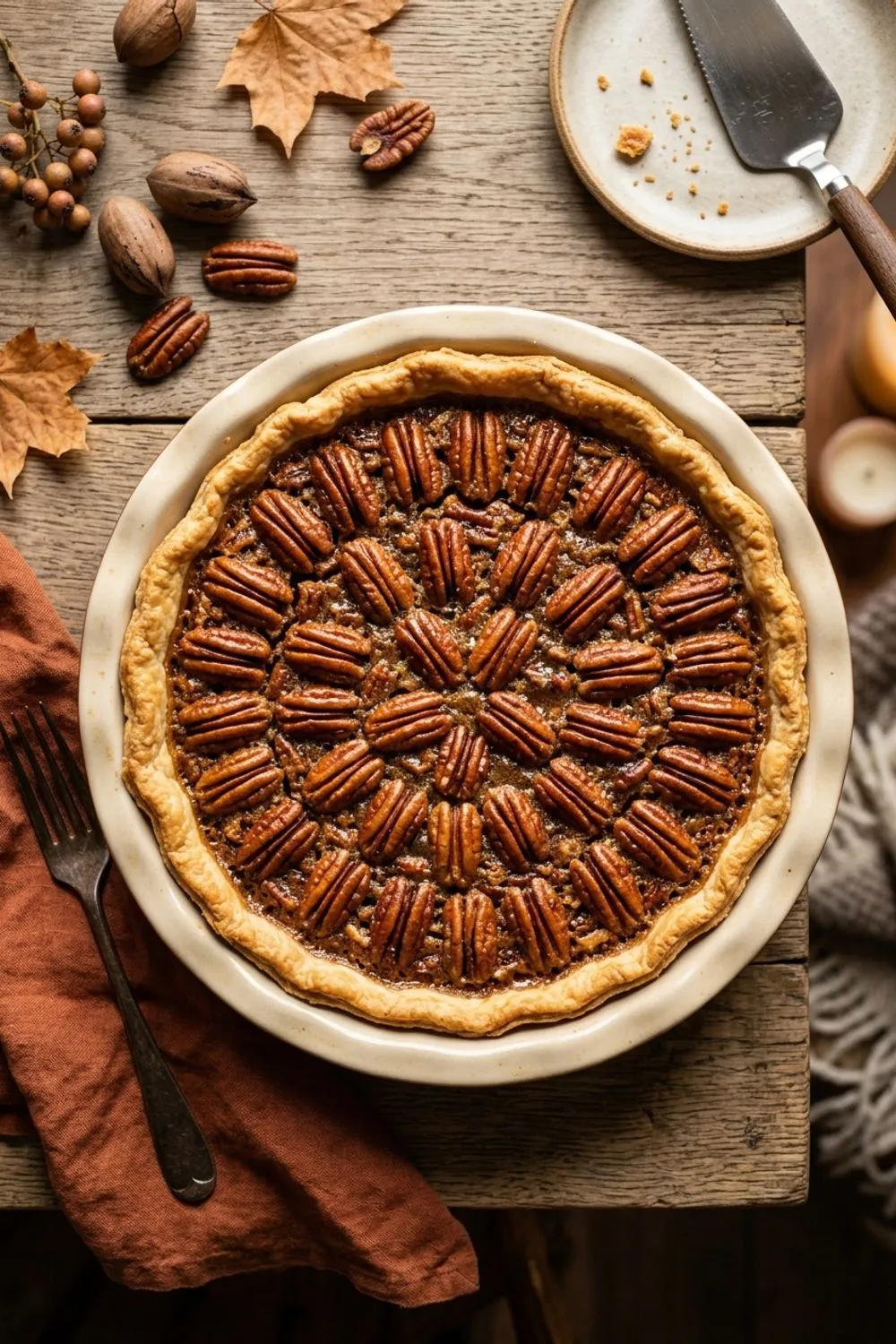
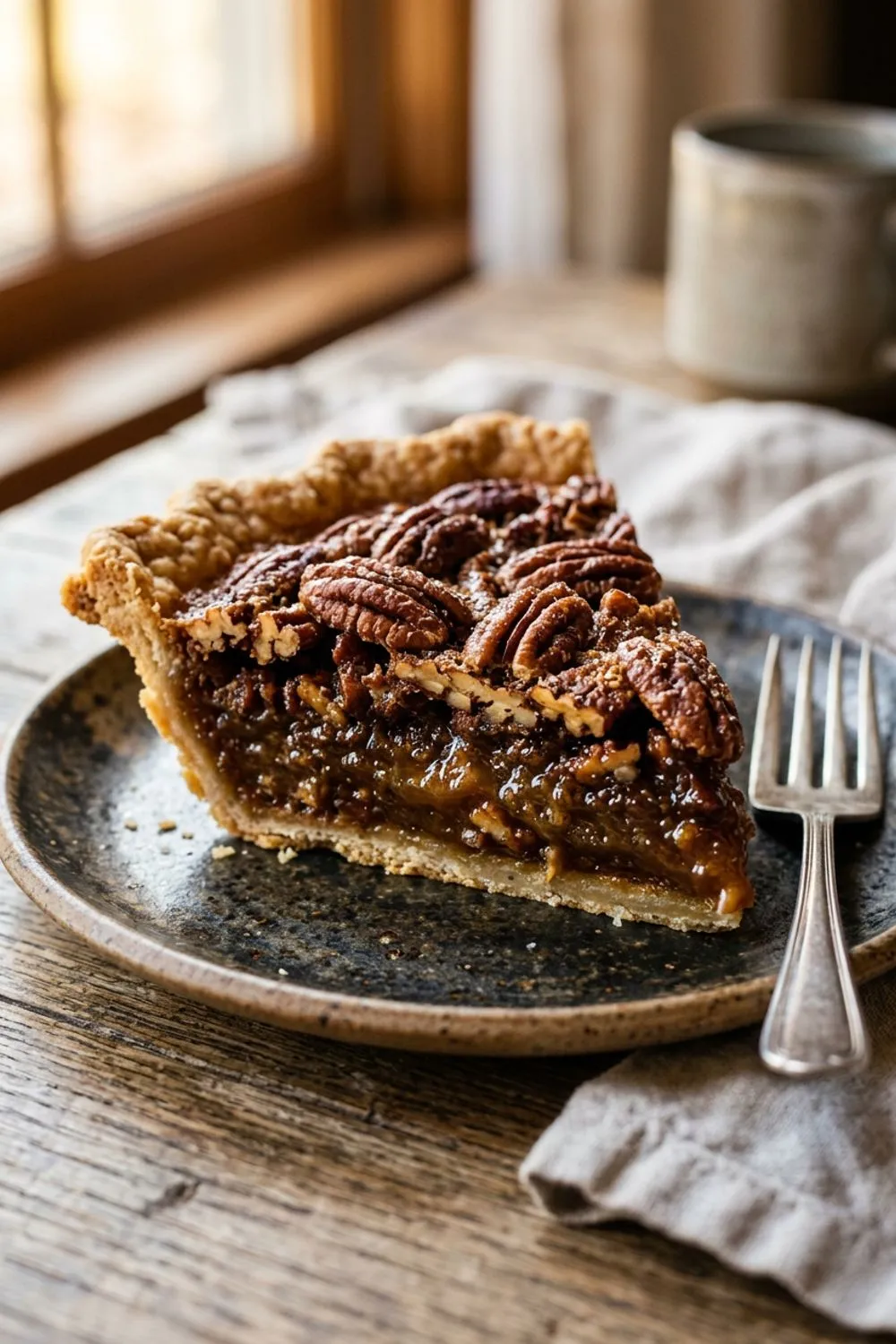
When you pour the filling over the pecans, they will float to the surface and arrange themselves in a beautiful mosaic. You can nudge them around with a fork if you want a more uniform look, but I find the natural arrangement usually looks the most appealing.
The pie bakes at 350°F, which is lower than many recipes suggest. I have found that a lower, slower bake produces a silkier filling with less risk of the top cracking or the edges burning. It takes about 40 to 45 minutes. You will know it is done when the edges are puffed and set but the center — about the size of a golf ball — still jiggles when you gently shake the pan. This jiggle is crucial. If the center is completely firm when you pull it from the oven, the pie is overbaked and the filling will be grainy rather than smooth.
The Cooling Period
I know three hours sounds like an eternity, but pecan pie filling needs time to set. If you cut into it too soon, the center will be loose and soupy. The carryover heat continues cooking the custard as it cools, and the sugars need to reach a lower temperature before they firm up into that signature gooey-but-sliceable consistency.
If you are making this for a holiday dinner, bake it the morning of or even the night before. Pecan pie is one of those rare desserts that actually improves after sitting overnight. The flavors meld, the filling sets perfectly, and a quick 10-minute warm-up in a 300°F oven before serving brings it back to life.
Variations Worth Trying
Chocolate Pecan Pie
Scatter 1/2 cup of dark chocolate chips over the bottom of the par-baked crust before adding the pecans and filling. The chocolate melts into the custard as it bakes, creating a rich, fudgy layer at the bottom that pairs beautifully with the caramelized pecans. If you love my French silk pie, this variation gives you the best of both worlds.
Maple Pecan Pie
Replace the corn syrup with pure maple syrup for a New England twist. Use Grade A Dark or Grade B maple syrup — the darker grades have a more robust flavor that stands up to the brown sugar and pecans. This version tastes incredible with a drizzle of extra maple syrup on top when serving.
Bourbon Caramel Pecan Pie
For an even more decadent version, make a quick bourbon caramel by cooking 1/2 cup of sugar until amber, then adding 2 tablespoons of bourbon carefully and 1/4 cup of cream. Use this in place of some of the corn syrup. The result is intensely caramelized and deeply addictive.
Pro Tips for a Perfect Pecan Pie
Buy whole pecan halves, not pieces. Halves look dramatically better on top of the pie, and they are usually fresher than pre-chopped pieces. Save the broken or less attractive halves for the bottom layer where they will be hidden by custard.
Use a light-colored metal or glass pie dish. Dark pans absorb more heat and can over-brown the crust before the filling is set. Glass is my preference because you can see the color of the bottom crust and know exactly when it is done.
Shield the edges if needed. If the crimped edges of the crust are browning faster than the filling is cooking, wrap a strip of aluminum foil around the rim. Pie crust shields also work well for this purpose.
Let the pie come to room temperature before serving. Pecan pie straight from the fridge is firm and waxy. At room temperature, the filling is soft and gooey, and the pecans have a more pronounced flavor. Give it at least 30 minutes out of the fridge if it has been chilled.
How to Store Southern Pecan Pie
At room temperature: Pecan pie can sit at room temperature for up to 2 hours after baking. After that, refrigerate it because of the egg-based custard filling.
In the refrigerator: Cover tightly with plastic wrap or store in an airtight container. Pecan pie keeps in the refrigerator for up to 4 days. As mentioned, bring to room temperature for 30 minutes before serving for the best texture and flavor.
In the freezer: Cool the pie completely, then wrap tightly in plastic wrap followed by aluminum foil. Freeze for up to 2 months. Thaw overnight in the refrigerator and warm in a 300°F oven for 10 to 15 minutes before serving.
Common Mistakes to Avoid
Using raw pecans. I will say it again because it is that important. Raw pecans taste like cardboard compared to toasted ones. Six to eight minutes in the oven is all it takes. Set a timer, stir them once halfway through, and you will be rewarded with a pie that tastes exponentially better.
Over-mixing the filling. Vigorous whisking incorporates air bubbles, which cause the filling to puff up dramatically in the oven and then deflate as it cools. This deflation creates an unsightly sunken center and surface cracks. Whisk gently, just until everything is combined and uniform in color.
Baking at too high a temperature. Many recipes call for 375°F or even 400°F, which cooks the outside of the filling faster than the inside. The result is firm, almost chewy edges with a still-liquid center, forcing you to overbake the whole pie to set the middle. My 350°F approach takes a few minutes longer but produces a much more even texture throughout.
Skipping the par-bake. The filling for pecan pie is essentially liquid when it goes into the crust. Without a par-bake, the bottom crust sits in that liquid for the entire baking time, which produces a soggy, doughy bottom that detracts from the otherwise wonderful eating experience. Fifteen minutes with pie weights is all you need.
Cutting before the filling has set. Three hours feels like an eternity, but pecan pie filling continues to firm up as it cools. Cutting too early gives you a slice that oozes filling across the plate rather than standing proudly on its own. If you are serving at a specific time, plan your baking schedule backwards from the 3-hour cooling window.
Serving Ideas
Pecan pie is rich, so smaller slices are appropriate — this recipe serves 10 comfortably. A dollop of lightly sweetened whipped cream is the classic accompaniment, and it provides a beautiful contrast to the density of the filling. Vanilla ice cream works too, especially if you are serving the pie warm.
For a Thanksgiving spread, I love serving this alongside apple pie and pumpkin pie. Three pies on the table covers every preference — fruit, custard, and nut — and makes the table look absolutely stunning. Set them at slightly different heights on cake stands or stacked books for a display that your guests will remember.
A Brief History of Pecan Pie
Pecan pie as we know it is a distinctly Southern American creation, though its exact origins are debated. Pecans are native to the Mississippi River Valley and were a staple food of Indigenous peoples long before European settlers arrived. The combination of pecans, sugar, and eggs in a pie crust likely emerged in the late 1800s, though the oldest verified recipes date to the early 1900s.
The recipe gained national prominence in the 1930s when the manufacturers of Karo corn syrup began printing a pecan pie recipe on their labels. This marketing stroke of genius linked corn syrup and pecan pie in the American imagination permanently. Before Karo, pecan pies were made with various sweeteners — cane syrup, molasses, brown sugar, or combinations thereof. The corn syrup version became dominant because it was consistent, widely available, and produced a reliably smooth, glossy filling.
Today, pecan pie is synonymous with Thanksgiving and Christmas across the South, though it has spread far beyond its regional origins. Every family has their own version, and the debates — corn syrup versus maple syrup, bourbon or no bourbon, walnuts added or strictly pecans — are as passionate and unresolvable as any family disagreement worth having.
Never Miss a Sweet Recipe
Join 5,000+ home bakers and get new recipes straight to your inbox.
Ingredients
Pie Crust
Pecan Filling
Instructions
- 1
Prepare the Pie Crust
Whisk flour, sugar, and salt in a bowl. Cut in the cold butter using a pastry cutter or your fingertips until the mixture resembles coarse crumbs with pea-sized butter pieces. Add ice water one tablespoon at a time, mixing gently until the dough just comes together. Shape into a disc, wrap in plastic, and refrigerate for at least 1 hour.
- 2
Roll and Par-Bake
Roll the chilled dough into a 12-inch circle on a floured surface. Transfer to a 9-inch pie dish and trim the overhang to 1 inch. Fold the edges under and crimp decoratively. Prick the bottom with a fork, line with parchment and pie weights, and bake at 375°F (190°C) for 15 minutes. Remove the weights and parchment, and set aside.
- 3
Toast the Pecans
Spread the pecan halves on a rimmed baking sheet and toast in the 375°F oven for 6–8 minutes, stirring once, until fragrant and slightly darker. Watch them carefully — pecans go from perfectly toasted to burnt in about 30 seconds. Set aside to cool slightly.
- 4
Make the Filling
In a large bowl, whisk together the dark corn syrup, brown sugar, melted butter, eggs, vanilla, bourbon if using, and salt until smooth and well combined. The mixture should be glossy and uniform in color.
- 5
Assemble and Bake
Scatter the toasted pecans evenly over the bottom of the par-baked crust. Slowly pour the filling over the pecans — they will float to the top. Arrange any pecans that look out of place. Bake at 350°F (175°C) for 40–45 minutes, until the edges are set but the center still has a slight jiggle when you gently shake the pan.
- 6
Cool Completely
Remove from the oven and place on a wire rack. The filling will continue to set as it cools. Allow at least 3 hours of cooling time before slicing. For clean slices, chill in the refrigerator for 30 minutes before cutting, then bring back to room temperature for serving.
Nutrition Information
Per serving (serves 10). Values are approximate.
| Calories | 490 calories |
| Total Fat | 27g |
| Saturated Fat | 9g |
| Carbohydrates | 58g |
| Sugar | 44g |
| Protein | 6g |
| Sodium | 210mg |
| Fiber | 2g |
* Percent Daily Values are based on a 2,000 calorie diet. Your daily values may be higher or lower depending on your calorie needs. Nutritional information is an estimate and may vary.
Frequently Asked Questions
Can I use light corn syrup instead of dark?
Yes, but dark corn syrup gives the pie a deeper, more caramel-like flavor. If you use light corn syrup, add an extra tablespoon of brown sugar to compensate for the milder taste.
Is the bourbon necessary?
No, the bourbon is optional and adds a subtle warmth that complements the pecans beautifully. The alcohol bakes off during cooking, leaving only the flavor. You can omit it entirely or substitute an extra teaspoon of vanilla extract.
How do I know when pecan pie is done?
The edges should be set and firm, while the center should jiggle slightly like set gelatin, not like liquid. If you insert a knife about 2 inches from the center, it should come out mostly clean. The filling will firm up significantly as it cools.
Can I make pecan pie without corn syrup?
You can substitute a mixture of 3/4 cup maple syrup and 1/4 cup honey for the corn syrup. The flavor profile will be different — more maple-forward — but it is delicious in its own right.

Reader Reviews
Based on 198 reviews