Holiday & Seasonal
Classic Strawberry Shortcake
Why You’ll Love This Strawberry Shortcake
There are desserts you make because they are impressive, and there are desserts you make because they are perfect. Strawberry shortcake is both. It is the kind of recipe that stops conversations at a summer dinner party and makes people close their eyes with that first bite. And the beautiful thing is that it requires absolutely no special skills, no unusual equipment, and barely half an hour of your time.
I grew up eating strawberry shortcake made with those spongy yellow rounds that come in packages at the grocery store. They were fine — sweet, soft, familiar. But the first time I had strawberry shortcake made with real homemade biscuits, I understood what the fuss was about. A proper shortcake biscuit is flaky, buttery, and just barely sweet. It has the richness to stand up to juicy fruit and cream without turning into a soggy mess, and the texture contrast between the crisp exterior and soft interior is what makes every bite interesting.
This recipe is the one I have been making for over fifteen years, and it has never let me down. The biscuits come together in minutes, the strawberries need nothing but sugar and time, and the whipped cream takes two minutes with a hand mixer. The whole dessert is an exercise in simplicity done right, and I think that is exactly what makes it so special. When your ingredients are this good, you do not need to complicate things.
The Case for Real Biscuit Shortcakes
I want to take a moment to argue for the biscuit-style shortcake because I think it is genuinely superior to every alternative. Some recipes use pound cake. Some use angel food cake. Some use those packaged sponge rounds I mentioned. All of them work, technically, but none of them deliver the same experience as a freshly baked, golden-brown biscuit split open and loaded with berries and cream.
The magic of the biscuit is in the layers. When you cut cold butter into flour and handle the dough minimally, you create thin sheets of butter dispersed throughout the dough. When those hit the hot oven, the butter melts and creates steam, which puffs the layers apart. The result is a biscuit that pulls apart into flaky, tender sheets — the exact texture you want when you are soaking up strawberry juices and whipped cream.
The slight sweetness of the biscuit dough is intentional and important. This is not a dinner biscuit — it is a dessert. But it is not as sweet as a cake or a cookie either. That moderate sweetness lets the strawberries and cream be the stars while the biscuit provides structure and richness in the background.
If you are worried about making biscuits from scratch because you have had tough, flat failures in the past, I promise this recipe will change your mind. The keys are cold ingredients, minimal handling, and a hot oven. Follow those three principles and you will have tall, flaky biscuits that look like they came from a professional bakery.
All About the Strawberries
The strawberries make or break this dessert, so let me talk about them for a moment. First, buy the best strawberries you can find. At the peak of summer, farmers market strawberries are incomparably better than what you find at the grocery store. They are smaller, uglier, and more fragile — and they taste about ten times more intensely of actual strawberry.
If farmers market berries are not an option, buy the best grocery store berries you can and make sure they are red all the way through, not white at the top. Underripe strawberries will not macerate properly and will taste sour and crunchy instead of sweet and juicy.
Macerating is the process of tossing sliced fruit with sugar and letting it sit. The sugar draws moisture out of the strawberry cells through osmosis, and within about thirty minutes, you have berries swimming in their own ruby-red syrup. This syrup is liquid gold — it soaks into the biscuit, mingles with the whipped cream, and makes every bite burst with strawberry flavor.
I slice my strawberries about a quarter-inch thick. Thin enough to release plenty of juice, thick enough to maintain some texture and bite. You do not want strawberry mush — you want distinct pieces of fruit in a pool of natural syrup. A quarter cup of sugar is the right amount for two pounds of berries. It sweetens the syrup without making the whole thing taste like candy.
Making Whipped Cream That Holds Up
Fresh whipped cream is non-negotiable here. The canned stuff has its place, and that place is on a Wednesday night sundae, not on a proper strawberry shortcake. Real whipped cream made with cold heavy cream, a touch of powdered sugar, and vanilla extract takes two minutes and tastes infinitely better.
The secret to great whipped cream is cold everything. Cold cream, cold bowl, cold beaters. I put my mixing bowl and whisk attachment in the freezer for ten minutes before whipping. This helps the cream whip faster and hold its shape longer.
Whip to soft peaks — the cream should mound gently on the whisk and hold a peak that curls over at the tip. Do not whip to stiff peaks for shortcake. Soft whipped cream drapes over the berries and biscuit, creating that luscious, cloud-like effect. Stiff whipped cream sits on top like a dollop of frosting and does not meld with the other components in the same appealing way.
I use powdered sugar rather than granulated because it dissolves instantly and contains a tiny amount of cornstarch, which helps stabilize the cream. If you need the whipped cream to hold up for a longer time — say, for a party where it will sit out — you can add a tablespoon of instant vanilla pudding mix to the cream before whipping. This stabilizes it for several hours without affecting the flavor.
Assembling Strawberry Shortcake
Assembly is the easiest part, but timing matters. Shortcake is best served within about fifteen minutes of being put together. If it sits too long, the biscuit absorbs too much juice and loses its flaky texture. So macerate your berries, bake your biscuits, whip your cream, and then assemble right before serving.
Split each biscuit in half using a serrated knife or simply pulling it apart with your hands. The torn, rustic look is actually more appealing than a clean knife cut because it creates more surface area for the juices to soak into.
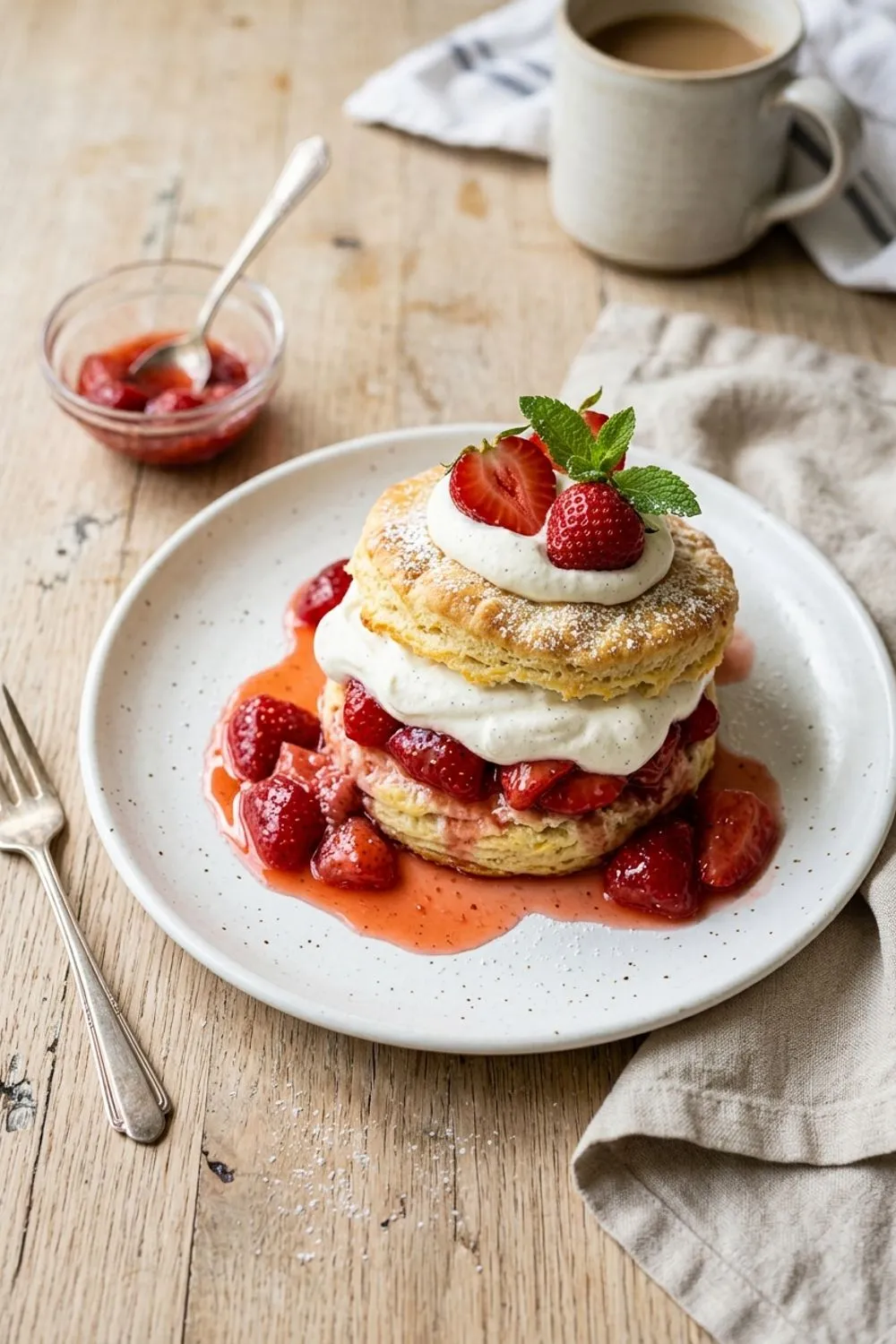
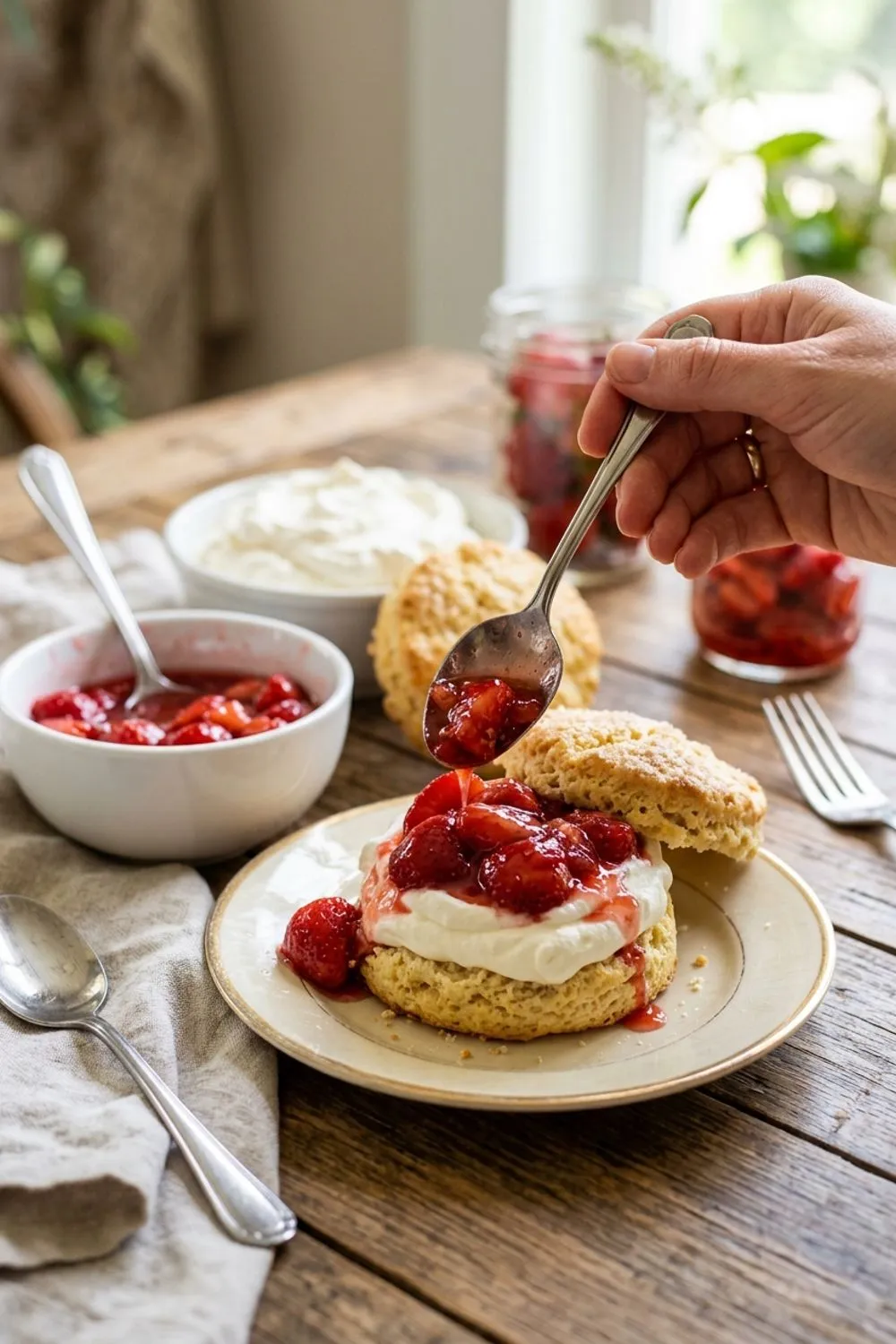
Place the bottom half on a plate, cut side up. Spoon a generous amount of strawberries over it, making sure to include plenty of that precious syrup. Add a big dollop of whipped cream. Place the top biscuit half on the cream, slightly askew so you can see the layers. Top with more strawberries and another cloud of cream. Let a little syrup drizzle down the sides.
Serve with a fork and a spoon — the fork for the biscuit and fruit, the spoon for chasing every last drop of juice and cream around the plate. This is not a dessert to eat daintily. It is meant to be messy, joyful, and thoroughly satisfying.
Variations for Every Occasion
Mixed berry shortcake: Replace half the strawberries with blueberries, raspberries, or blackberries for a colorful summer medley. Macerate them all together for the best flavor.
Peach shortcake: When peach season hits, swap the strawberries for ripe, sliced peaches macerated with a tablespoon of brown sugar and a squeeze of lemon juice. Add a pinch of cinnamon to the biscuit dough.
Chocolate shortcake: Replace two tablespoons of the flour in the biscuit recipe with cocoa powder. The chocolate biscuits with strawberries and cream are a decadent twist that is especially popular with my teenagers.
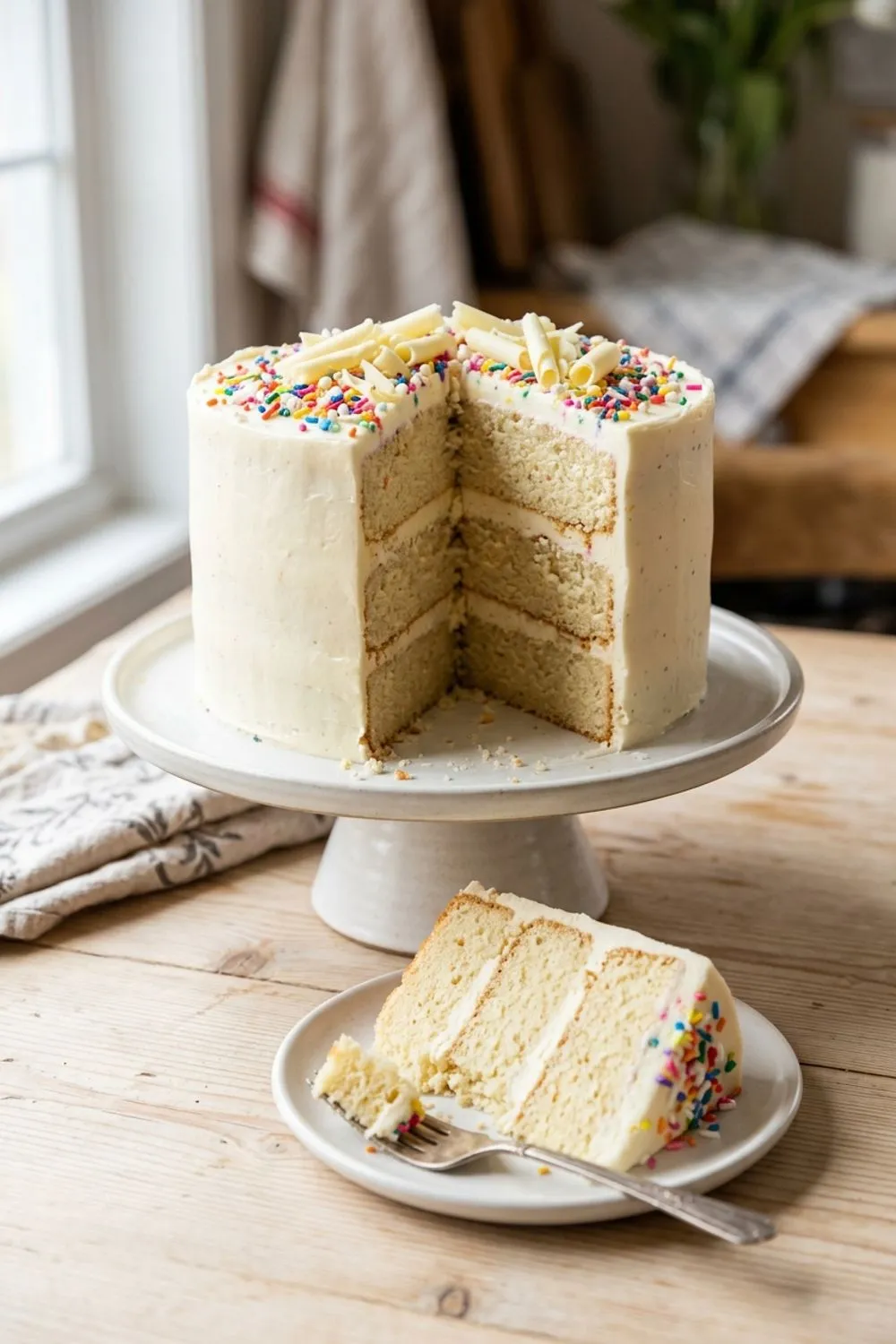
Lemon whipped cream: Add the finely grated zest of one lemon to the whipped cream. The bright citrus note pairs beautifully with the strawberries and adds another layer of flavor. You might also enjoy my classic vanilla cake for another celebration-worthy dessert.
Tips for the Flakiest Biscuits
Keep the butter cold. This is the most important rule. Cut the butter into cubes and put it back in the freezer for ten minutes before adding it to the flour. You want distinct pieces of cold butter in the dough, not butter that has melted into the flour.
Do not overmix. Stir the wet ingredients into the dry with a fork, using as few strokes as possible. The dough should look shaggy and rough. Smooth dough means overdeveloped gluten, which means tough biscuits.
Pat, do not roll. I use my hands to pat the dough to the right thickness rather than a rolling pin. A rolling pin can compress the layers and push out the air. Patting is gentler and preserves those flaky layers.
Cut straight down. When using a biscuit cutter, press straight down and pull straight up. Do not twist the cutter — twisting seals the edges of the biscuit and prevents it from rising properly.
Bake them hot. A 425-degree oven is essential. The high heat creates steam quickly, which is what gives the biscuits their dramatic rise and flaky layers. A lower temperature produces flat, dense biscuits that will disappoint you.
Troubleshooting Common Problems
Biscuits are flat and dense: The butter was not cold enough, or the dough was overworked. Cold butter is what creates those beautiful flaky layers — when the butter melts before the biscuits go in the oven, you lose the steam that puffs the layers apart. Next time, freeze the butter cubes for ten minutes before cutting them into the flour, and stop mixing the moment the dough barely comes together.
Biscuits are dry and crumbly: Too much flour. When measuring flour, do not pack it into the cup — use the spoon-and-level method, or better yet, weigh it. The dough should feel slightly sticky and moist. If it feels dry and powdery, add a tablespoon more cream.
Strawberries are not juicy enough: They need more macerating time, or your berries are underripe. Give them at least thirty minutes at room temperature, and up to four hours in the refrigerator. Slightly increasing the sugar also helps draw out more juice. If your strawberries are truly lackluster, a tablespoon of orange juice or balsamic vinegar added to the sugar can wake up the flavor dramatically.
Whipped cream is grainy or curdled: You whipped it too long and it started turning into butter. There is no fixing this — start over with fresh cream. Watch carefully once the cream starts thickening and stop at soft peaks. The transition from perfectly whipped to overwhipped happens in just seconds.
Shortcake falls apart during assembly: Make sure the biscuits are cool before splitting. A hot biscuit crumbles when cut. Use a serrated knife with a gentle sawing motion, or split the biscuit by inserting two forks into the side and gently pulling apart. The rustic torn look is actually more traditional and shows off those beautiful flaky layers.
Making Shortcake for a Crowd
This recipe serves eight, which is perfect for a family dinner or small gathering. But strawberry shortcake is also a phenomenal choice for larger events, and it scales up beautifully.
For a buffet or party, I set up a shortcake station rather than pre-assembling individual servings. Pile the biscuits on one platter, set out the macerated strawberries in a large bowl with a slotted spoon, and put the whipped cream in a separate bowl with a serving spoon. Let guests build their own shortcakes. This approach has three advantages: the biscuits stay crisp until the moment of assembly, guests can customize the ratio of berries to cream, and it creates an interactive dessert experience that gets people talking and mingling.
For a double batch, simply double all the ingredients. Roll and cut two trays of biscuits, macerate four pounds of berries, and double the whipped cream. You can bake the biscuits in batches if your oven only fits one sheet at a time.
How to Store Strawberry Shortcake
Assembled shortcake: This does not store well and should be eaten the same day. The biscuit absorbs the juices and becomes soggy within a few hours.
Biscuits alone: Store in an airtight container at room temperature for up to two days, or freeze baked biscuits for up to one month. Rewarm in the oven before using.
Macerated strawberries: Refrigerate in a covered container for up to two days. The berries will continue to break down and release more juice, which is fine.
Whipped cream: Best made fresh, but stabilized whipped cream can be refrigerated for up to four hours.
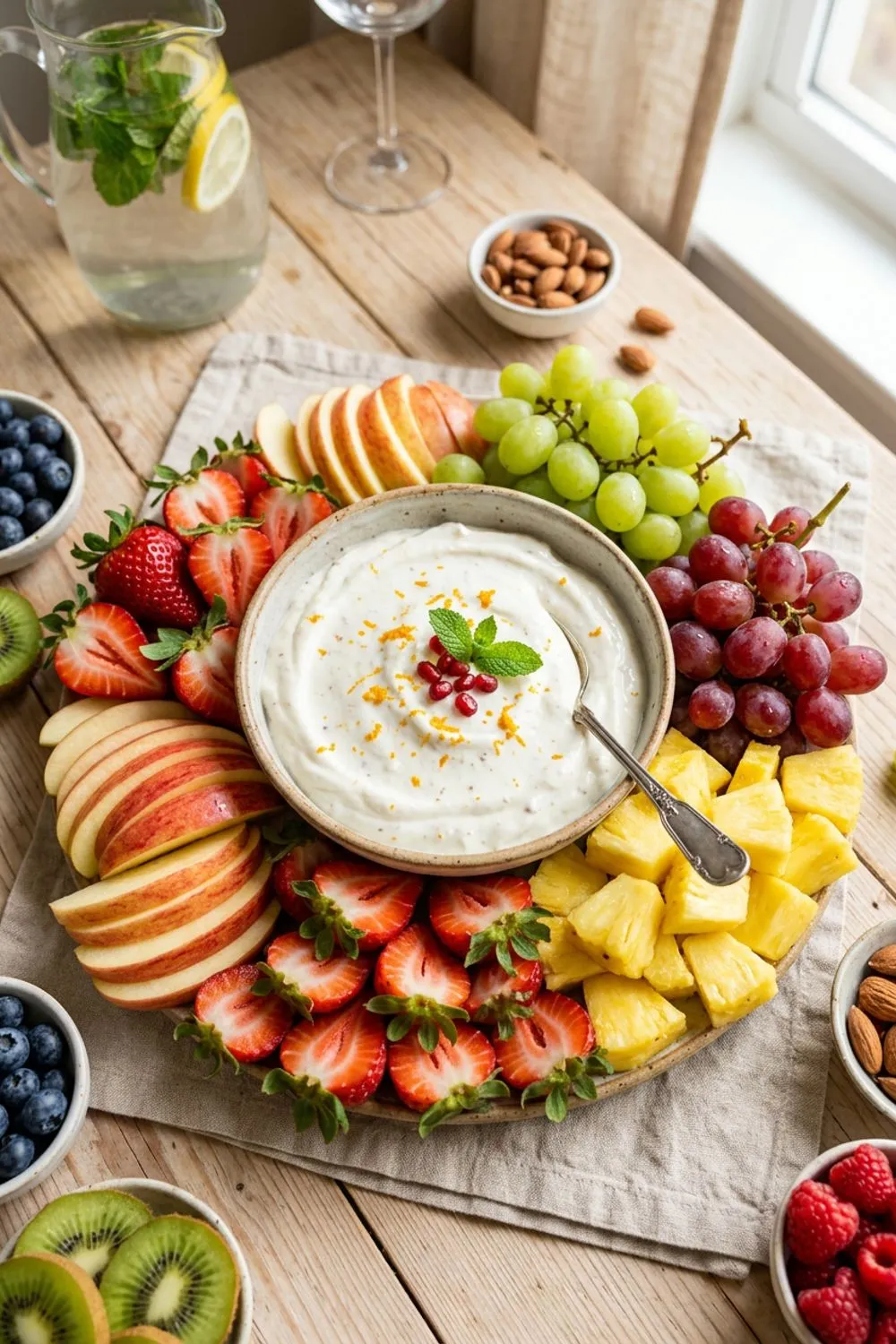
Strawberry shortcake is one of those desserts that never goes out of style. It has been a beloved American classic for well over a century, and for good reason — when the ingredients are at their peak and the components are made with care, there is simply nothing better. This is the dessert that makes summer taste like summer, and I make it every chance I get. For a lighter fruit-based treat, try my fruit dip served alongside the same beautiful strawberries.
Never Miss a Sweet Recipe
Join 5,000+ home bakers and get new recipes straight to your inbox.
Ingredients
Shortcake Biscuits
Macerated Strawberries
Whipped Cream
Instructions
- 1
Macerate the Strawberries
Toss the sliced strawberries with 1/4 cup sugar in a bowl. Cover and let sit at room temperature for at least 30 minutes (or refrigerate for up to 4 hours). The sugar draws out juices, creating a natural strawberry syrup.
- 2
Mix the Biscuit Dough
Preheat oven to 425°F (220°C). In a large bowl, whisk together flour, sugar, baking powder, and salt. Add the cold cubed butter and cut it in with a pastry blender or your fingertips until the mixture resembles coarse crumbs with some pea-sized pieces of butter remaining.
- 3
Add the Wet Ingredients
In a small bowl, whisk together the cold cream, egg, and vanilla. Pour into the flour mixture and stir with a fork until the dough just comes together. Do not overmix — some shaggy bits are fine.
- 4
Shape and Bake
Turn dough onto a lightly floured surface and pat to 3/4-inch (2cm) thickness. Cut into 8 rounds using a 3-inch biscuit cutter. Place on a parchment-lined baking sheet, brush tops with a little cream, and sprinkle with sugar. Bake 13-15 minutes until golden brown.
- 5
Make the Whipped Cream
While biscuits cool, whip the cold heavy cream, powdered sugar, and vanilla with an electric mixer on medium-high speed until soft peaks form, about 2-3 minutes. Do not overwhip.
- 6
Assemble
Split each biscuit in half horizontally. Place the bottom half on a plate, spoon strawberries and their juices over it, add a generous dollop of whipped cream, then place the top biscuit half on top. Add more strawberries and cream on top. Serve immediately.
Nutrition Information
Per serving (serves 8). Values are approximate.
| Calories | 320 calories |
| Total Fat | 17g |
| Saturated Fat | 10g |
| Carbohydrates | 38g |
| Sugar | 19g |
| Protein | 4.5g |
| Sodium | 280mg |
| Fiber | 2g |
* Percent Daily Values are based on a 2,000 calorie diet. Your daily values may be higher or lower depending on your calorie needs. Nutritional information is an estimate and may vary.
Frequently Asked Questions
Can I use frozen strawberries?
Fresh are best for shortcake, but thawed frozen strawberries work in a pinch. They will be softer and release more juice, which some people actually prefer.
Can I make the biscuits ahead of time?
Yes, bake them up to a day ahead and store in an airtight container. Rewarm in a 350°F oven for 5 minutes before assembling. You can also freeze unbaked biscuits for up to a month.
What is the difference between shortcake and sponge cake?
Traditional shortcake uses a biscuit-style dough made with butter and cream, giving it a flaky, rich texture. Sponge cake is lighter and airier. Both work, but the biscuit version is the classic.
Why are my biscuits flat?
The butter or cream was not cold enough, or the dough was overworked. Keep everything cold and handle the dough as little as possible for tall, flaky layers.

Reader Reviews
Based on 187 reviews