Cakes & Cupcakes
Vanilla Birthday Cake
The ultimate vanilla birthday cake recipe with tender crumb and rich vanilla flavor. Perfect for celebrations and easy enough for any baker.
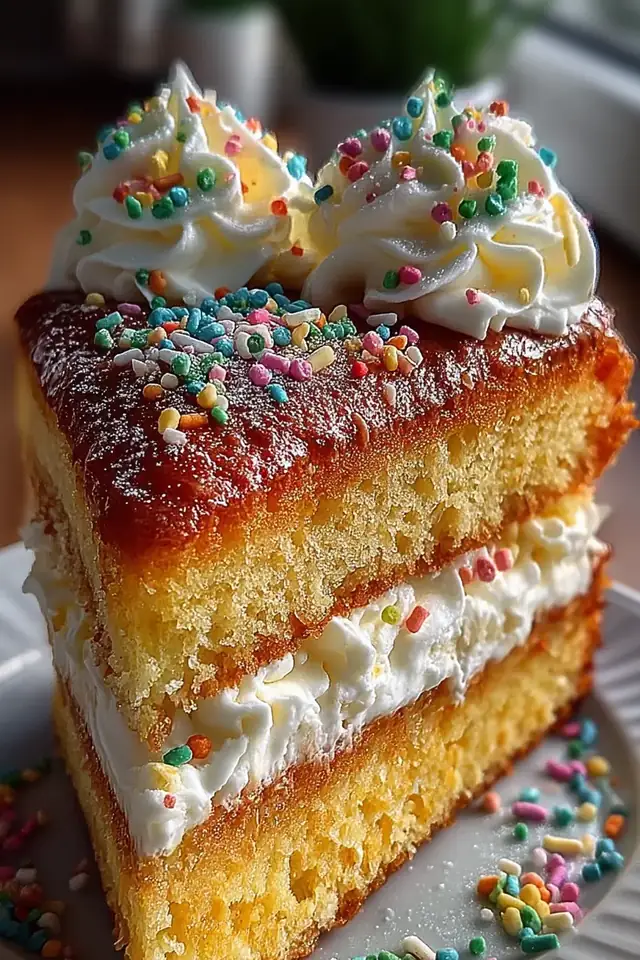
The Cake Everyone Wants on Their Special Day
There’s something magical about the moment the birthday candles get lit and your homemade vanilla cake takes center stage. I’ve baked this classic vanilla birthday cake for countless celebrations, and it never fails to bring smiles to the table. With its tender, moist crumb and pure vanilla flavor, it’s the perfect canvas for any frosting and topping your heart desires.
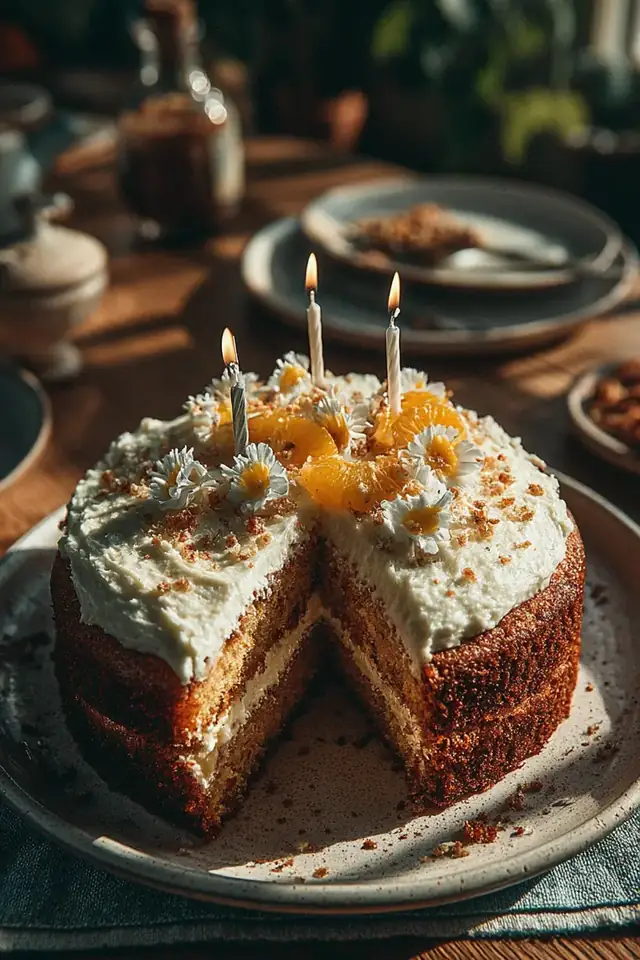
Baker’s Tips
- Room temperature ingredients are crucial for a fluffy cake. Remove eggs, butter, and milk from the fridge 30 minutes before baking so they blend smoothly.
- Don’t open the oven door during the first 25 minutes of baking. This sudden temperature change can cause the cake to sink in the middle.
- For perfectly level cake layers, wrap the outside of your pans with wet cake strips before baking. This helps the cakes rise evenly.
- If your cake domes on top, use a serrated knife to gently trim it level before frosting. This creates a stable base for your frosting and ensures clean, even layers.
Variations
- Lemon Vanilla Cake: Add 2 tablespoons fresh lemon juice and 1 tablespoon lemon zest to the batter for a bright, citrusy twist on the classic.
- Almond Vanilla Cake: Replace 1/4 cup of the flour with almond flour and add 1/2 teaspoon almond extract along with the vanilla for a delicate, nutty flavor.
- Strawberry Shortcake Version: Frost with whipped cream instead of buttercream and layer with fresh sliced strawberries between the cake layers for a lighter, fruity celebration cake.
Pair this cake with my classic buttercream frosting for the most versatile, customizable finish.
Ingredients
For the Cake
For the Frosting
Instructions
- 1
Prepare Your Pans
Preheat your oven to 350°F (175°C). Grease and flour two 9-inch round cake pans, or line the bottoms with parchment paper for easy release.
- 2
Mix Dry Ingredients
In a medium bowl, whisk together flour, baking powder, and salt. Set aside.
- 3
Cream Butter and Sugar
In a large bowl, beat softened butter and granulated sugar together for 2-3 minutes until light and fluffy. Scrape down the sides of the bowl as needed.
- 4
Add Eggs and Vanilla
Add eggs one at a time, beating well after each addition. Stir in vanilla extract until combined.
- 5
Alternate Wet and Dry
Add the flour mixture in three additions, alternating with the milk. Begin and end with the flour mixture, mixing on low speed until just combined after each addition.
- 6
Bake the Cakes
Divide batter evenly between prepared pans. Bake for 25-28 minutes, until a toothpick inserted in the center comes out clean or with just a few moist crumbs. Cool in pans for 10 minutes, then turn out onto wire racks to cool completely.
- 7
Make the Frosting
Beat softened butter until creamy. Gradually add powdered sugar, one cup at a time, beating well. Add cream, vanilla, and salt, then beat until light and fluffy, about 2 minutes.
- 8
Frost and Decorate
Place one cooled cake layer on your serving plate and spread with frosting. Top with second layer and frost the top and sides. Add sprinkles or candles as desired.
Nutrition Information
Per serving (serves 12). Values are approximate.
| Calories | 285 calories |
| Total Fat | 12g |
| Saturated Fat | 7g |
| Carbohydrates | 42g |
| Sugar | 28g |
| Protein | 3g |
| Sodium | 185mg |
| Fiber | 0g |
* Percent Daily Values are based on a 2,000 calorie diet. Your daily values may be higher or lower depending on your calorie needs. Nutritional information is an estimate and may vary.
Never Miss a Sweet Recipe
Join 5,000+ home bakers and get new recipes straight to your inbox.
Frequently Asked Questions
Can I make this cake ahead of time?
Absolutely! Baked and cooled cake layers can be wrapped tightly in plastic wrap and stored in the refrigerator for up to 3 days, or frozen for up to 3 months. Frost the cake the day you plan to serve it for the best taste and texture.
Why is my cake dry?
Overbaking is the most common culprit. Check your oven temperature with an oven thermometer and remove cakes as soon as a toothpick comes out clean. Also, ensure your eggs and milk are at room temperature, which helps create a tender crumb.
Can I use salted butter instead of unsalted?
You can, but I recommend reducing the salt in the recipe to just a pinch since salted butter already contains added salt. This gives you better control over the final flavor.

Reader Reviews
Based on 367 reviews